

Moving goods from one place to another sounds simple. In practice, businesses must coordinate trucks, storage space, delivery times, paperwork, and communication. Delays can affect stock levels, orders, or production.
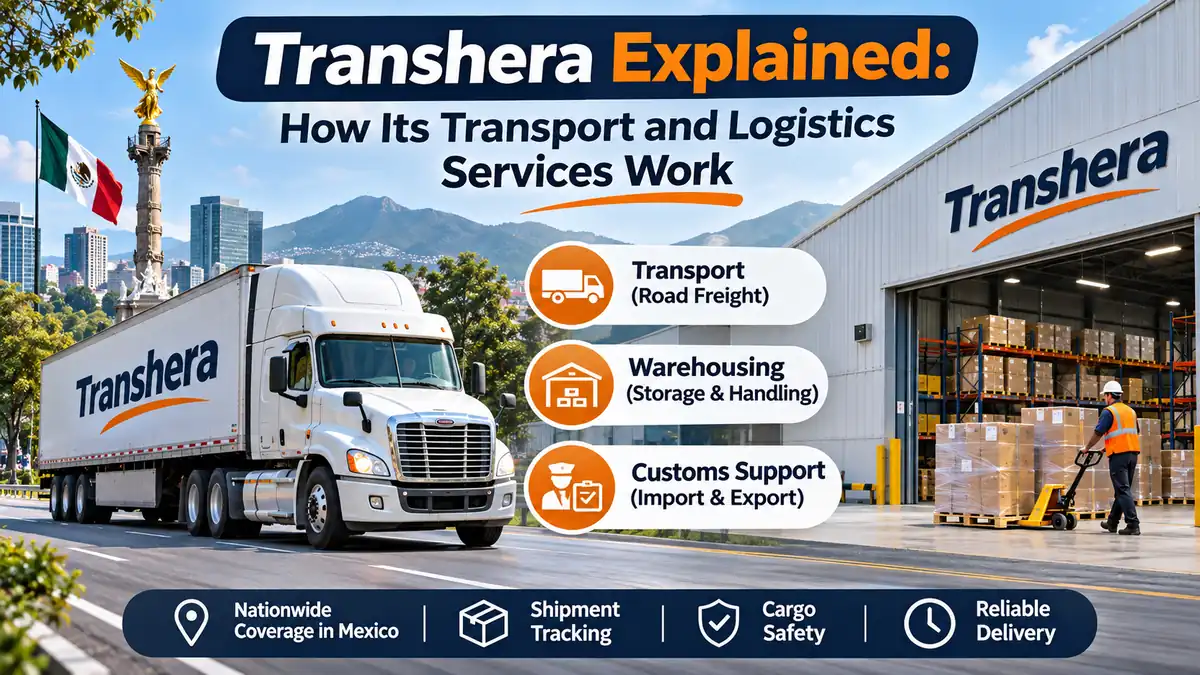
Transhera is a transport and logistics name linked to freight movement in Mexico. Its public website presents road transport, warehousing, and customs-related support as part of its service offering. It also emphasizes shipment visibility and dependable delivery planning.
This guide explains what Transhera advertises, how these services usually work, and what customers should check before arranging a shipment. It serves businesses in Mexico and international readers.
What Is Transhera?
Transhera, also styled TransHera, is presented online as a Mexican transport and logistics provider. Its website uses the name Hera Transportes and describes services intended to help businesses move and manage commercial goods. Its focus is commercial freight.
The company advertises nationwide coverage in Mexico, land transportation, storage, customs-related services, and continuous tracking. Availability depends on the route and cargo.
A useful distinction is that transportation moves freight physically, while logistics organizes the wider journey. Logistics may include pickup times, vehicle selection, warehouse handling, documents, and delivery updates. Together, these activities help products reach the correct destination in usable condition.
Company Background and Public Information
The company’s website identifies Mexico City as its contact location and provides channels for requesting a quotation. It describes a goal of making cargo movements safer, more efficient, and easier for business customers to manage.
However, the published material does not clearly establish its founding year, ownership, registered company number, fleet size, or complete operating address. These points should not be filled in with guesses, especially for valuable cargo.
Before signing an agreement, ask for the legal business name, billing details, service terms, and any credentials that apply to the proposed route. Confirming these details helps customers know which organization will be responsible for their goods and payments.
Core Transport and Logistics Services
The three main service categories advertised by Transhera are land transportation, warehousing, and customs-related assistance. Each addresses a different part of the supply chain. A business may need only a truck journey, while another may need storage and document coordination.
Land transportation usually covers collecting goods, moving them by road, and arranging delivery. Warehousing may involve receiving pallets, holding stock, or preparing products for dispatch. Customs support can help coordinate processes connected with imported or exported merchandise.
The precise scope matters. For example, a company that advertises warehousing may not offer temperature-controlled storage or order packing. Likewise, customs-related assistance does not automatically mean the provider holds a customs broker’s authorization.
Customers should request a written list of services, capacity limits, excluded cargo, and responsible parties. Clear terms matter more than broad promises.
How the Shipping Process Works
A commercial shipment normally begins with a request describing the cargo, collection address, destination, dimensions, weight, and desired delivery date. The transport provider uses this information to assess the route, equipment needs, and estimated cost.
If the customer accepts the proposal, the next stage is scheduling. The shipper prepares the goods, labels packages, and confirms loading requirements. The carrier then collects the freight and records details needed to identify the shipment.
During transit, dispatch teams may monitor progress, handle route changes, and communicate with the receiver. At delivery, the receiving business checks the goods and signs or records proof of delivery under the agreed process.
This is a general freight workflow, not a verified description of Transhera’s internal system. Customers should ask how its actual booking, collection, status reporting, and delivery confirmation steps operate before sending goods.
Road Freight and Delivery Planning
Road freight suits many domestic deliveries because trucks can collect products near their origin and deliver them close to the final customer. Routes may connect factories, wholesale markets, distribution centers, and retail locations without a change of transport mode.
The right vehicle depends on weight, dimensions, packaging, and cargo sensitivity. Full truckload shipping generally reserves vehicle capacity for one customer’s freight, while shared loads combine smaller shipments. Transhera does not publicly establish which of these options it offers on every route.
Route planning also accounts for distance, traffic, road restrictions, loading hours, and possible delays. Realistic delivery windows matter more than unsupported promises.
Businesses should confirm whether loading and unloading are included. They should also check whether the driver can access narrow streets, restricted facilities, or locations that require scheduled receiving appointments.
Warehousing and Inventory Handling
Warehousing gives businesses a place to hold products before they are sold, used, or moved again. It can support seasonal demand, delayed customer orders, or deliveries that arrive before the receiving location is ready.
Transhera lists storage among its service categories, but the website does not specify available warehouse capacity, exact facilities, or specialist storage conditions. Confirm these details before booking sensitive goods.
Good warehouse management depends on accurate receiving records, stock identification, careful handling, and clear dispatch instructions. Some facilities also provide picking, packing, labeling, or stock reports, although these extras should never be assumed.
A customer should ask how incoming goods are counted, how damage is recorded, what security arrangements apply, and when storage charges begin. These practical questions often reveal more about service suitability than a general description.
Customs Support and Cross-Border Needs
Customs processes become important when commercial goods enter or leave a country. They can involve product classification, invoices, declarations, duties, inspections, and coordination with authorized specialists. Errors may cause delays or added expenses.
Transhera advertises customs-related services, but that statement alone does not confirm direct customs brokerage, international transportation, or coverage of a particular border crossing. Businesses should ask whether the company performs a task itself or works with an outside specialist.
For goods entering Mexico, importers may need a customs declaration called a pedimento, commercial records, transport documents, and product-specific approvals. The exact requirements depend on the merchandise and the direction of travel.
US and UK businesses shipping into Mexico should clarify who acts as importer, who prepares documents, and who pays taxes and handling charges. Written responsibility for each step helps prevent costly misunderstandings.
Shipment Tracking and Communication
Tracking helps customers understand where freight is and whether the delivery plan has changed. Transhera’s website advertises round-the-clock tracking and traceability, but it does not clearly describe the customer interface or how frequently updates appear.
In the transport industry, tracking may use vehicle location systems, dispatch reports, driver messages, or milestone scans. A live map differs from a coordinator’s status report.
Useful updates include collection confirmation, departure, significant delays, arrival at the destination, and delivery completion. For time-sensitive stock, customers may also want early warnings about disruptions rather than discovering problems after the agreed arrival window.
Ask who can access the tracking information and how exceptions are reported. A direct contact for urgent problems is valuable even when automated tracking is available.
Service Coverage in Mexico and Beyond
The company’s website describes nationwide transport coverage within Mexico. This suggests a domestic focus, but it does not provide a complete list of routes, delivery frequencies, service limits, or confirmed transit times for individual destinations.
Coverage can mean different things. Some providers operate their own vehicles on selected routes and use partner carriers elsewhere. Others coordinate transport through a wider network. The public description does not establish Transhera’s exact operating model.
International customers should not assume that nationwide Mexican coverage includes direct service to the United States, the United Kingdom, or other countries. Request confirmation of collection points, destinations, transfer arrangements, and the company responsible for each stage.
Transport Costs and Quotations
Freight pricing depends on the shipment itself and the service required. Distance matters, but so do cargo size, weight, vehicle type, loading conditions, waiting time, and any special handling or storage needs.
Transhera invites customers to request a personalized quotation rather than publishing a standard price list. This approach is common when shipments vary significantly, but it means an estimate cannot be treated as a confirmed final charge.
Before accepting an offer, check these items:
- Pickup and delivery locations, plus the agreed service window.
- Charges for transport, storage, waiting, and extra handling.
- Insurance arrangements, payment terms, and possible surcharges.
A useful quotation should explain what is included, what may change, and when additional fees apply. Compare matching service terms, not headline prices alone.
Cargo Safety and Legal Requirements
Freight safety begins before a truck leaves the loading area. Packaging, labeling, weight distribution, securing methods, and loading procedures can reduce the chance of damage during normal road movement.
The Transhera website highlights security and traceability, but it does not publicly establish its insurance limits, safety certifications, or claims procedures. A shipper should request current documents and understand who carries the risk at each stage.
In Mexico, certain freight movements involve an electronic tax document with the Carta Porte supplement. This records details about the goods, locations, and transport arrangement. Requirements vary by operation, so businesses should confirm the correct paperwork for their shipment.
For valuable or fragile cargo, ask about coverage exclusions, damage reporting deadlines, and proof of condition at pickup. Proper records make it easier to investigate an incident and decide what happens next.
Benefits and Limits for Business Customers
A coordinated transport provider can reduce the time a business spends arranging separate vehicles, delivery calls, and storage activities. This may be useful for manufacturers, wholesalers, retailers, and companies managing regular domestic freight.
Better coordination can also improve planning. When expected delivery dates and stock movements are visible, purchasing and warehouse teams can make more informed decisions. The actual benefit depends on service quality, not simply on the range of services advertised.
There are limits to consider. A provider may not handle every cargo category, rural destination, urgent booking, or international route. Special equipment, hazardous goods, and refrigerated products require direct confirmation rather than assumptions.
For small businesses, flexible shipment sizes and clear communication may matter more than a large national network. Larger customers may prioritize capacity, reporting standards, and consistent performance across repeat orders.
How to Evaluate Transhera Before Booking
Start by describing the shipment precisely. Provide accurate dimensions, weight, origin, destination, packaging type, delivery deadline, and any access restrictions. Missing details can lead to unsuitable vehicles, delays, or revised charges.
Next, confirm the legal entity behind the quotation. Ask about relevant permits, liability insurance, invoice details, subcontractors, and service conditions. For customs-related work, establish who is authorized to complete each regulated activity.
Request a written plan that explains collection, transport, tracking, delivery confirmation, and the response to delays or damage. For a first booking, a smaller shipment may help a company assess communication and reliability before increasing volume.
Reviews can help, but are insufficient alone. Compare the provider’s written promises with the documents, contacts, and operating arrangements you can verify independently.
Final Thoughts
Transhera presents itself as a provider of road transportation, warehousing, and customs-related logistics support in Mexico. Its public description also highlights national coverage and shipment tracking, features that matter to businesses managing deliveries.
At the same time, some important company details and service conditions are not clearly documented publicly. Customers should confirm legal identity, routes, capacity, prices, insurance, and specific responsibilities instead of treating marketing descriptions as guarantees.
The best transport arrangement is one that matches the cargo, destination, budget, and required level of control. Careful questions before booking can help businesses protect their goods and build a more dependable supply chain.
(FAQs)
What is Transhera?
Transhera is a transport and logistics brand associated with Hera Transportes in Mexico. Its website describes road freight, storage, and customs-related support for businesses.
Where does Transhera operate?
The company advertises nationwide coverage in Mexico and lists Mexico City as its contact location. Specific routes, collection areas, and delivery times should be confirmed directly.
Does Transhera offer shipment tracking?
Its website advertises 24/7 tracking and cargo traceability. Ask whether your shipment includes live location access, scheduled updates, or tracking through a company representative.
Can Transhera manage international shipping?
Its site mentions customs-related services but does not clearly confirm direct international freight coverage. Check the countries, border arrangements, and authorized partners involved before booking.
How much does Transhera charge?
No fixed public freight price list is clearly available. Request a written quotation with cargo details and review potential storage, handling, waiting, and insurance costs.
Is Transhera a reliable logistics provider?
It has a public business website describing its services, but that alone cannot establish performance or legal credentials. Verify registration, coverage, insurance, and terms before committing valuable freight.