Finding a business online may sound easy. Yet company names can lead to old websites, unrelated businesses, directory profiles, or pages designed to imitate real brands. Choosing the first result without checking it can create problems later.
Target Company URL Research is the process of finding a company’s correct website address and confirming that it belongs to the intended business. It also helps researchers understand what the company does, where it operates, and how to contact it.
This guide explains a clear method that beginners can use for sales research, supplier checks, business directories, and general company analysis. The goal is not simply to collect website addresses. It is to collect addresses that are accurate, useful, and easy to verify.
What Is Target Company URL Research?
A company URL is the web address used to reach a business website. The main domain is usually the most useful starting point. A business may also have separate pages for its products, careers, investors, or regional offices.
Target Company URL Research connects a specific business name to the correct official domain. That sounds simple until several companies share similar names or a business trades under a brand that differs from its legal name.
The process involves more than finding a matching name. Researchers compare company details, examine website content, and look for independent signs that the website belongs to the intended organization.
A reliable result identifies both the company and its website. If the evidence is weak, the address should remain unconfirmed rather than being treated as a fact.
Why Finding the Correct Website Matters
A verified website helps people reach the right organization. Sales teams use company domains to understand potential customers, while purchasing teams check suppliers before starting business discussions.
Recruiters may review official career pages to learn which roles a company is hiring for. Writers and analysts use company websites to check services, leadership statements, locations, and product descriptions.
An incorrect address can cause more than wasted time. It may mix information from two separate businesses, send messages to the wrong organization, or make a database unreliable.
The main benefit is confidence. When each website is checked carefully, later research starts with a stronger foundation and requires fewer corrections.
Information to Collect Before You Search
Start with the full company name. Include any known trading name, legal ending, or common abbreviation. For example, a business might use a shorter brand name online than it uses in registration records.
Location is another important clue. Record the country, city, or region if available. Two firms with the same name can operate in different markets and have completely unrelated websites.
Industry details also help narrow the results. A software developer, construction supplier, and clothing store may share a name but have very different services and customers.
For a small research task, keep three starting details together:
- Company name and known alternative names.
- Country or city, when available.
- Industry or a short description of its work.
These details do not prove ownership of a domain. They simply make the search more focused and reduce confusion when multiple results appear.
How to Find a Company’s Official Website
Begin with a web search using the company name and location. If the name is common, add a product, industry, or other identifying detail. A more specific request usually makes the right business easier to locate.
Quotation marks can help when you need to look for an exact company name. You can also search for the name alongside words such as official website, contact, or about, then compare the results.
Read beyond the first result. A sponsored listing, directory page, or social media profile may appear before the company’s own website. Its position alone does not confirm that it is official.
Open likely candidates and look at their main pages. Check whether the organization name, services, location, and contact information match the business you intended to find.
If no clear result appears, try an alternate business name or look for a company profile that mentions its website. Treat that profile as a clue until the address has been checked independently.
How to Verify a Company Domain
The first check is identity. An official website should describe the same company you are researching. Read its About and Contact pages rather than judging the homepage logo alone.
Next, compare information with an independent record. Depending on the country, a government company register may help confirm the legal name, office location, or business status. Not every register provides website addresses.
You can also compare a domain with addresses used in clearly established company communications, such as published annual reports or verified corporate materials. Matching details across independent places strengthens confidence.
Domain registration lookup services may show registration dates, registrar information, or technical records. However, privacy protection and incomplete records mean that registration data rarely proves who operates a website by itself.
When the signs disagree, stop and investigate. A matching business name with a different country, unrelated products, or conflicting contact details needs further review.
Useful Tools for Company Website Research
Search engines are usually the easiest starting tools. They help locate company homepages, older brand names, directory entries, and public documents that mention a business domain.
Business registries can help confirm legal identities. Companies House serves as one useful register for UK companies, while businesses in the United States may be registered through state-level systems.
Professional networking profiles and business directories can provide possible website addresses. Their information may be outdated or entered by users, so it is important to double-check it.
Domain lookup tools can show technical details about a name, and spreadsheets help organize findings. No single tool is enough for every case. Using several simple checks is usually more dependable than trusting one result.
What to Look for on a Company Website
The About page often explains the company’s work, background, and audience. Compare these details with what you already know. Be cautious when the page offers only vague claims and no clear business identity.
The Contact page may show an office address, phone number, support channel, or business email. Compare the location with other credible records, especially when the firm operates in several countries.
Service and product pages reveal what the business actually sells. These pages are useful when several companies have similar names but work in different industries.
Legal notices, privacy information, or investor pages may provide a registered business name. Their absence does not automatically mean a website is false, but consistent details across multiple pages make a candidate easier to assess.
Understanding Domains, Subdomains, and Redirects
A domain is the central part of a website address. A subdomain is an added section that may point to a store, help center, or regional service. Both can belong to the same organization.
A page path comes after the domain and identifies a specific section, such as a contact page. When building a company list, save the main official domain unless your task requires a particular page.
Redirects send visitors from one address to another. Businesses sometimes use them after a rebrand or website move. Record the current destination and check whether the transition is supported by credible company information.
Be careful with lookalike addresses. Extra words, unusual spelling, or a familiar brand name placed inside an unrelated domain can mislead readers. The padlock and HTTPS connection protect data in transit; they do not prove the business is genuine.
How to Spot Fake or Misleading Websites
Some websites copy real company names, logos, and layouts. Others use addresses that differ from the official domain by one letter or add words such as support, payment, or verification.
Check for conflicts in the business description, location, or contact details. An address that sends you to an unrelated company, or a contact page that does not identify its operator, deserves closer attention.
Pressure to pay immediately, share account credentials, or download unexpected files is another warning sign. Do not enter sensitive information merely because a website looks polished or uses HTTPS.
If the site is uncertain, find another trusted way to contact the business. Use an established record or communication channel instead of relying on the suspicious page’s own contact details.
Researching Companies in Different Countries
International research adds language differences, legal naming rules, and regional websites. One organization may use separate country domains, while another uses a single worldwide website with local pages.
Check whether the business is a parent company, subsidiary, franchise, or independent company with a similar name. A group website may explain the relationship without being the best address for the specific branch you need.
For UK companies, registered names may include Ltd or PLC. US firms may use LLC or Inc. Such endings can help distinguish organizations, but they do not always appear in public-facing brand names.
Look for country-specific office details and relevant services before choosing a domain. If more than one official site exists, record which market each address serves rather than assuming one version fits every task.
Keeping a Clean Company URL Database
A basic spreadsheet is enough for most small projects. Give each business its own row so information stays easy to sort, review, and update. Avoid combining several unrelated companies in one entry.
Useful columns include company name, official domain, country, industry, verification status, and date checked. A notes column can explain rebrands, regional sites, or uncertain matches.
Keep formatting consistent. Store a full website address in the same style for each row, remove accidental spaces, and avoid keeping multiple copies of the same business without a reason.
Review records from time to time. Companies move domains, merge, close, or change names. A website that was correct last year may no longer represent the same business today.
A Simple Example and Common Mistakes
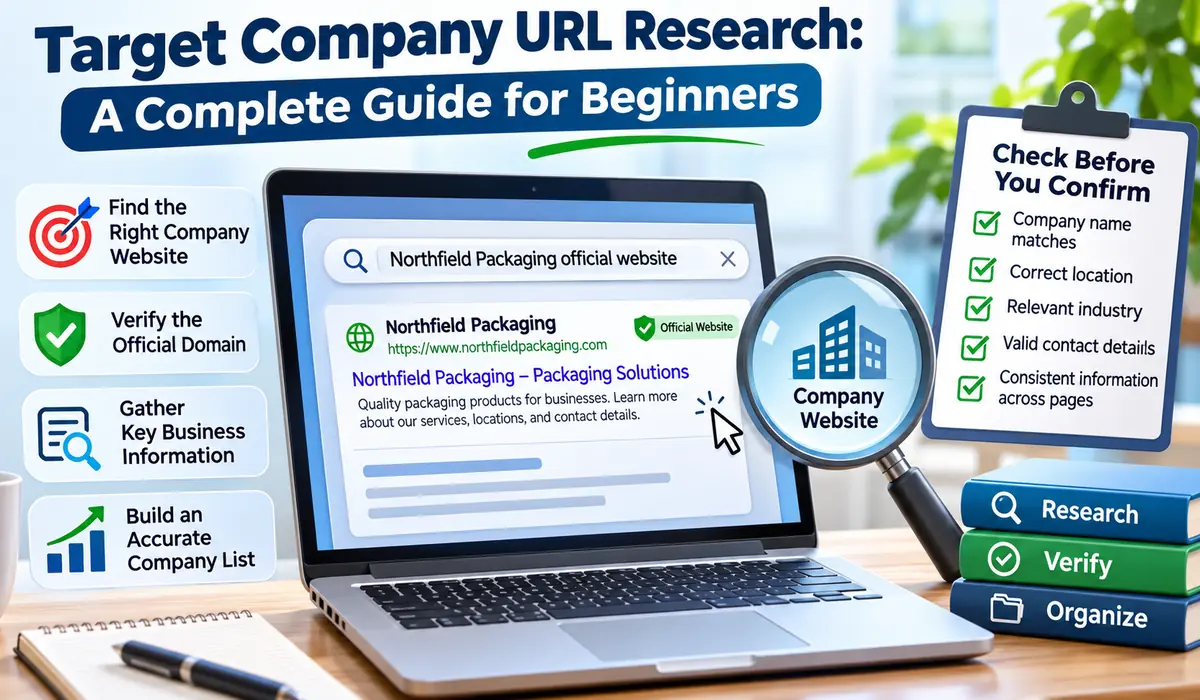
Imagine researching a fictional business called Northfield Packaging based in Manchester. A broad search produces several Northfield-named companies, a directory entry, and one website describing packaging supplies.
Instead of copying that address immediately, compare the city, services, and full business name. Check its contact page and look for an independent company record that supports the identity. Only then mark the domain as verified.
A common mistake is assuming the first result is correct. Another is treating a social profile, directory entry, or old domain as final proof without opening the current website.
Speed matters when working with hundreds of companies, but a short verification step is more valuable than a long list of guesses. If a company cannot be matched confidently, label the record for review instead of inventing an address.
Final Thoughts
Target Company URL Research is a practical skill for anyone who works with company information. The strongest results come from finding a likely domain, checking the business identity, and comparing details with trustworthy independent information.
You do not need expensive software to begin. A search engine, business records, careful reading, and an organized spreadsheet can support a reliable workflow.
Focus on accuracy before speed. Record uncertainty when evidence is missing, revisit old entries when needed, and remember that an official-looking website is not always an official one.
Frequently Asked Questions (FAQs)
What is the main purpose of company URL research?
Its purpose is to identify a business’s official website and confirm that the address belongs to the intended company. This makes further business research and communication more reliable.
How can I find a company website for free?
Search the full company name with its city or industry, then inspect likely results. Compare the website with independent business details before saving its address.
Can two companies have similar website names?
Yes. Different businesses can have similar brand names and closely related domains. Check their location, industry, legal identity, and contact information to avoid mixing them up.
Is HTTPS enough to prove a website is official?
No. HTTPS means the connection is encrypted, but a misleading website can also use it. Confirm the company identity through separate evidence before sharing sensitive information.
What should I do if a company has no website?
Check alternative trading names and reliable business records first. If no official domain can be confirmed, record the result as not found rather than choosing a directory profile.
How often should company website records be updated?
The right schedule depends on how the records are used. Review high-priority entries before outreach or major decisions, and refresh older lists when companies rebrand or move websites.