

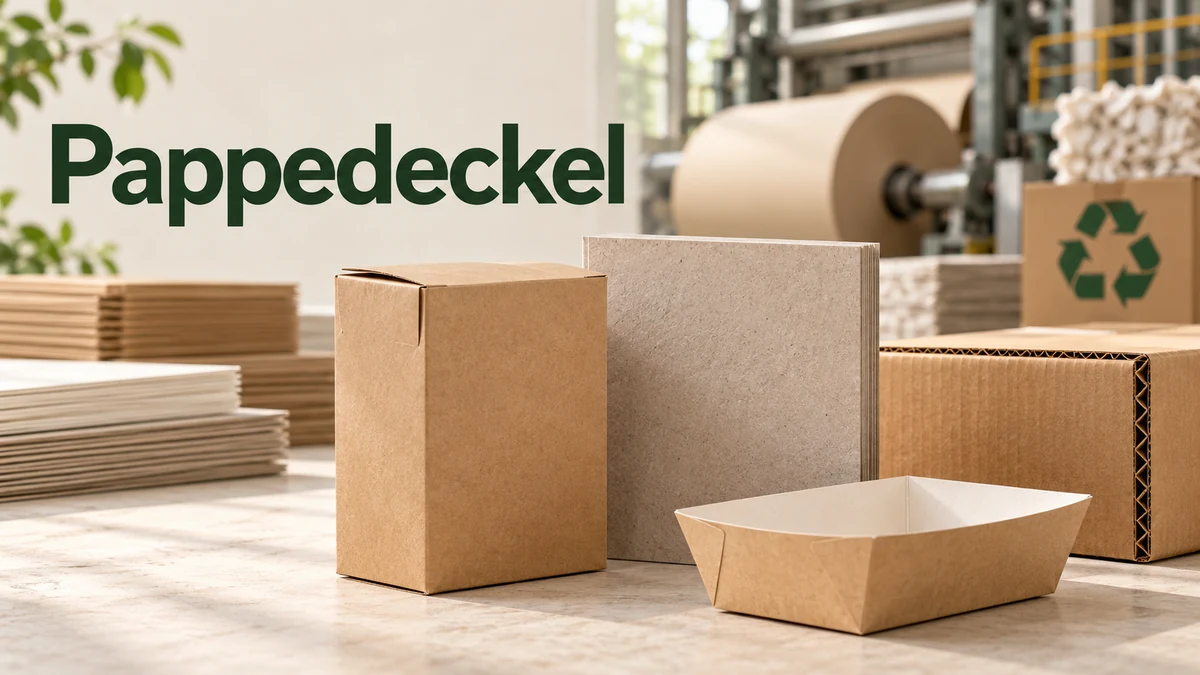
“Pappedeckel” is a German word associated with cardboard or stiff paperboard. Its precise meaning depends on context: it may refer to a piece of thick board, a cover, or a cardboard lid. In packaging discussions, the material matters as much as the word. Paperboard comes in different grades, thicknesses, and surface treatments, and those differences affect how well it protects products and whether it can be recycled.
This guide explains the term, how paperboard is made, where it is used, and what to check before buying or disposing of it. Because “cardboard” can describe several different products, the article uses “paperboard” when discussing the general rigid material and “corrugated cardboard” for packaging made with a fluted middle layer.
What Does Pappedeckel Mean?
Pappedeckel is connected to the German word Pappe, which refers broadly to cardboard or paperboard. Depending on region and context, the word may describe a stiff sheet or an object made from that material, such as a cover or lid.
It is not a precise technical grade. A packaging supplier would usually need more information, such as the board’s thickness, weight, fiber content, coating, and intended use. These details help distinguish a thin folding carton from a rigid book cover or a protective shipping insert.
In English, useful translations may include “cardboard,” “paperboard,” “cardboard cover,” or “cardboard lid.” The best choice depends on the object being described. A lid made from paperboard is one possible meaning, but it should not be assumed in every context.
Paperboard, Cardboard, and Corrugated Board
Paperboard is a thick, stiff paper-based material used for cartons, folders, backing sheets, and many other products. It is usually made as a flat sheet, though it can be cut, scored, folded, laminated, or shaped into packaging.
“Cardboard” is a broad everyday term rather than a single material specification. People may use it for paperboard or for corrugated shipping boxes. In manufacturing, those products have different structures and performance characteristics.
Corrugated board has a wavy, fluted layer between flat liner sheets. That structure gives shipping boxes strength and cushioning while using relatively little material. A solid paperboard sheet has no fluted center, so it is more suitable for folding cartons, covers, dividers, and other flat or formed components.
How Paperboard Is Made
Paperboard starts with cellulose fibers, usually from wood pulp, recovered paper, or a blend of both. Mills mix the fibers with water to form a slurry, spread it across a moving screen, and remove much of the water as the fibers settle into a sheet.
The wet sheet is pressed and dried. Pressure brings the fibers closer together, while heat removes more moisture and helps the sheet hold its form. Some grades are built from several layers, allowing manufacturers to combine different fiber types or create a particular surface and structure.
After drying, the board may be calendered to smooth it, coated to improve printing, or finished with treatments for stiffness, moisture resistance, or appearance. It is then cut into rolls or sheets for converters, who print, cut, crease, fold, and glue it into finished products.
Common Types and Grades
Paperboard is selected according to the job it needs to perform. A lightweight sheet may work for a backing card, while a thicker or multilayer board may be needed for a rigid package or heavy-duty divider.
Some common categories include folding carton board, solid board, recycled paperboard, and rigid board used for book covers or presentation boxes. Corrugated board is a separate construction used mainly for shipping and protective packaging.
Grade names and specifications vary by supplier and market. Buyers should request a product data sheet instead of relying on a general label such as “heavy cardboard.” The sheet can clarify thickness, basis weight, stiffness, recycled content, coating, and printing suitability.
Common Paperboard Types and Their Uses
| Paperboard type | Typical features | Common uses | Recycling notes |
|---|---|---|---|
| Folding carton board | Lightweight, printable, easy to crease and fold | Cereal boxes, medicine cartons, cosmetics packaging | Often recyclable when clean and dry; check local rules for coatings |
| Recycled paperboard | Made partly or entirely from recovered paper fibers | Packaging, dividers, backing sheets, tubes | Recyclability depends on cleanliness, coatings, and local collection |
| Solid paperboard | Dense, smooth, and sturdy | Covers, folders, rigid inserts, premium cartons | Usually recyclable if uncoated and free of attached materials |
| Corrugated board | Flat liner sheets with a fluted middle layer | Shipping boxes and protective packaging | Commonly recyclable when clean and dry; remove non-paper parts if local guidance requires |
| Coated or laminated board | Surface treated to resist moisture, grease, or scuffing | Food trays, cups, takeaway packs, printed cartons | May need special collection or may not be accepted in standard paper recycling |
Uses in Packaging and Everyday Products
Paperboard is found in retail packaging for items such as cereal, cosmetics, medicines, small electronics, and household goods. It can be printed with product details and shaped into cartons that protect items during storage and display.
Thicker board can serve as a book cover, folder, notebook backing, puzzle board, or separator inside a package. In shipping, flat paperboard inserts help keep products from moving or touching one another. Corrugated boxes provide more cushioning for heavier or fragile goods.
The material also appears in food service, including some cups, trays, sleeves, and takeaway containers. These products may have coatings or linings to resist water, oils, or heat, so their disposal options can differ from those of plain paperboard.
Choosing the Right Board
The right grade depends on the product’s weight, shape, handling conditions, and expected shelf life. A package for a light dry product may need a different level of stiffness than one intended to hold a heavy item or travel through a long shipping route.
Consider printing and conversion requirements as well. Smoothness affects print appearance, while thickness and stiffness affect folding, cutting, and how securely a carton holds its shape. A coating can add performance, but it may also change how the package is recycled.
Before ordering, compare a sample with the actual product and test it under realistic conditions. Check how it behaves during folding, stacking, transport, and exposure to humidity. A supplier can help match a board grade to the packaging design and equipment.
Benefits and Limitations
Paperboard is lightweight, printable, and adaptable to many shapes. It can be made with recovered fiber, and flat cartons are often easy to store and transport before they are assembled. These features make it useful for retail, shipping, crafts, and office products.
Its main limitation is sensitivity to moisture. Uncoated board can soften or lose strength when wet, and repeated handling can damage corners or edges. Paperboard also provides less cushioning than many corrugated structures or molded protective materials.
Coatings and laminates can improve moisture or grease resistance, but they may make recycling more difficult. A package should therefore be designed around its actual use: adding a barrier layer can help performance, but unnecessary layers may increase material complexity.
Paperboard for Food Packaging
Food packaging must be chosen for the food type and the conditions of use. A dry bakery item, a greasy meal, and a cold refrigerated product place different demands on a package. Manufacturers may use coatings, liners, or barriers to control moisture, oil, or contact between food and the board.
Do not assume that every paperboard item is safe for direct food contact. Look for packaging intended for that purpose and follow the manufacturer’s instructions. In the United States and the United Kingdom, food-contact materials are subject to applicable safety requirements; businesses should confirm that the specific packaging complies with the rules for its market and use.
Recycled fiber also requires careful consideration when the board touches food directly. The suitability of a product depends on its materials, construction, intended use, and the controls applied during manufacturing. A printed outer carton designed to hold a sealed food package is different from a board tray that directly contacts food.
Printing, Coatings, and Finishes
Paperboard can be printed with text, product information, and images. A smooth surface can support sharp graphics, while an uncoated or textured finish may give the package a more natural appearance. The choice affects both appearance and production.
Coatings can improve resistance to moisture, grease, scuffing, or light. Some products use a plastic film or wax layer; others use different barrier treatments. These finishes are not interchangeable, and the package label alone may not tell a consumer how well the item can be recycled.
When designing packaging, ask the supplier what the finish contains and whether local recycling systems accept it. A coating that is useful for the product may complicate sorting or fiber recovery. Choosing the simplest finish that meets the product’s needs can make disposal easier.
Is Pappedeckel Recyclable?
Plain, clean, dry paperboard is commonly accepted in paper recycling programs, but local rules vary. Some areas collect cartons and paperboard together; others have separate instructions for certain packaging types. Check the guidance from the local waste authority before placing an item in a recycling bin.
Food, grease, and liquid can lower the quality of recovered paper. Remove leftover food and separate detachable parts where local guidance asks you to do so. A small amount of residue may be treated differently from a board item soaked with oil or food.
Coated, waxed, laminated, or composite packaging may not be accepted with ordinary paper recycling. A package that looks like paper can contain plastic, metal, or other materials. If the label provides disposal instructions, use them alongside local collection rules.
How to Prepare Paperboard for Recycling
For ordinary paperboard cartons, empty the contents and keep the material as clean and dry as practical. Flattening a box or carton can save room in a household recycling container, although collection systems may have specific rules about size and preparation.
Separate plastic windows, foam inserts, metal fasteners, or other components when they come off easily and local guidance calls for separation. Do not spend time dismantling a package if the local program asks residents to leave it intact; collection systems differ.
Heavily soiled or wet board may belong in general waste or another local disposal stream. Composting is not automatically the right alternative: inks, coatings, adhesives, and food-contact treatments can affect whether a product is suitable for home or industrial composting.
Reuse and Practical Projects
Clean paperboard can often be reused before recycling. Flat sheets can protect surfaces during painting or packing, while sturdy cartons can store lightweight items. Reusing a package can extend its useful life, provided it remains clean and strong enough for the task.
For crafts, paperboard can be cut into labels, dividers, templates, backing pieces, or models. Choose an uncoated sheet if you plan to paint, glue, or write on it. Always check that the material is clean and has not been used to hold chemicals or unsafe substances.
Reuse has limits. A wet, crushed, or contaminated piece may no longer protect an item or work well for a craft. Keep food-contact packaging separate from projects involving children unless the material’s condition and prior use are known.
Buying and Storing Paperboard
When buying paperboard for a project or business, describe the intended use rather than asking only for “cardboard.” Tell the supplier whether the material must fold, carry weight, resist moisture, accept printing, or touch food. This helps narrow down suitable grades.
Request samples and technical details before placing a large order. Compare board thickness, stiffness, surface quality, fiber content, and finish. For packaging, test the sample with the actual product and the same storage and shipping conditions it will face.
Store unused board flat in a clean, dry place. Keep it away from direct moisture and large temperature changes, which can cause warping or weaken the material. Protect printed or coated sheets from scratches and dirt before use.
Conclusion
Pappedeckel is a German term associated with cardboard and stiff paperboard, but its exact sense depends on the context. In practical packaging work, identifying the board’s structure, grade, coating, and intended use is more helpful than relying on the word alone.
Paperboard can be made into cartons, covers, inserts, and many everyday products. Its performance depends on the fiber mix, thickness, construction, and finishing treatments. Clean, plain board is often recyclable, while food residue and barrier layers may affect local acceptance.
For the best choice, match the material to the product and confirm food-contact suitability when needed. Before disposal, follow local collection guidance, since recycling rules and facilities vary by location.
(FAQs)
What does Pappedeckel mean in English?
It generally refers to cardboard or stiff paperboard. Depending on context, it may mean a board sheet, cover, or cardboard lid.
Is Pappedeckel the same as corrugated cardboard?
Not necessarily. Pappedeckel is a general German term, while corrugated cardboard specifically has a fluted middle layer between flat sheets.
Can paperboard be recycled?
Many clean, dry paperboard products can be recycled, but acceptance depends on local rules and the package’s coatings or mixed materials. Check your local recycling guidance.
Is paperboard safe for direct food contact?
Only packaging designed and approved for the intended food-contact use should be used directly with food. Confirm the supplier’s specifications and applicable local requirements.
Do coatings make paperboard unrecyclable?
Some coatings or laminates can make recycling harder or unsuitable in certain programs. The result depends on the finish and the recycling facilities available locally.
How should I store unused paperboard?
Keep it flat in a clean, dry place, away from moisture and excessive heat. Protect the surface from dirt and scratches, especially if it will be printed or used for packaging.




[…] and finance content may introduce concepts such as budgeting, loans, or business planning. These subjects depend on personal circumstances and local rules. An article intended for a broad […]
Comments are closed.