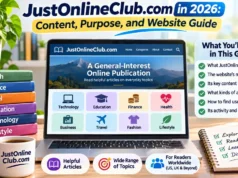


Finding useful information online can be harder than it sounds. One website may focus on breaking headlines, while another offers practical guides about work, money, technology, and daily life.
Newslikeyou.com is a general-interest publishing website that brings several subjects together. Its articles range from business trends and technology to lifestyle ideas, travel, and personal finance. It also has pages describing writing and content services for businesses.
This guide explains what the platform does, the topics readers can expect, and the tools available for exploring its posts. It also looks at the limits of the information and how to evaluate articles before using them to make important decisions.
What Is Newslikeyou.com?
Newslikeyou.com is an online information and article platform. Its public pages feature blog posts, topic categories, and explanations of subjects that affect everyday life. Although the name includes “news,” the visible material is not limited to reports about events happening right now.
The website works more like a broad digital magazine. Readers can find introductions to unfamiliar ideas, discussions of current trends, and practical topics that may stay useful long after publication. This makes it different from a newswire that focuses mainly on immediate developments.
The site’s About page describes a goal of sharing understandable information with students, professionals, travelers, entrepreneurs, and other curious readers. That is the website’s stated aim, rather than independent proof that every article reaches the same standard.
The Main Purpose of the Website
The central purpose is to make information easier to explore. Rather than expecting readers to know technical terms in advance, the site presents familiar subjects through explanations and general-interest articles. Someone researching a business idea may also discover a piece about digital habits or travel.
A second purpose is discovery. Browsing across categories can introduce people to topics they were not originally looking for. This is useful when an individual wants background knowledge instead of a single statistic, urgent alert, or detailed academic paper.
The platform also supports a commercial purpose. Separate service pages describe assistance with blog writing, website copy, content planning, and online marketing material. Readers should therefore distinguish its public articles from the services it offers to clients.
Topics and Categories Readers Can Explore
The site identifies several main subject areas, including business, education, fashion, finance, health, law, lifestyle, technology, and travel. General articles appear alongside these areas. The exact number of posts and the way categories are displayed can change as the website develops.
These sections help organize a broad collection of material. A reader interested in saving money could start with finance, while someone exploring new digital tools could visit technology. The categories are useful starting points, but a title and its content remain more important than its label.
A simple way to choose a section is to match it with your immediate goal:
- For work or money questions, explore business and finance.
- For digital tools and changing habits, look at technology and lifestyle.
- For everyday learning or trip ideas, try education and travel.
Technology and Digital Life Coverage
Technology is one of the topics emphasized in the site’s descriptions. Its coverage includes digital trends, software, online tools, and the effects of technology on ordinary routines. These subjects can help readers understand concepts before deciding whether to explore them further.
For example, the website has featured an article about the connection between technology, work, and lifestyle. Another discusses how artificial intelligence is changing small businesses.
People who are new to digital subjects may find this kind of introduction useful. However, a general overview should not replace a product’s official instructions, current security guidance, or hands-on testing. Software functions, prices, and risks can change quickly.
Business, Entrepreneurship, and Finance
Business content covers the choices organizations and individuals face as markets evolve. Recent topics have included consumer trends, entrepreneurship, and the use of artificial intelligence in small firms. These pieces offer a starting point for thinking about customers, technology, and changing work patterns.
Finance is another visible category. The website has published articles about savings accounts, credit cards, college costs, and related money questions. Its recent posts have also included discussion of asset allocation during changing interest-rate conditions and the mechanics of startup funding agreements.
A basic explanation of a term may be useful, but investment decisions, tax matters, and borrowing choices require accurate figures and personal context.
Readers in the US, UK, and elsewhere should check dates, local rules, fees, and official documents before acting.
Health, Lifestyle, and Travel Articles
Lifestyle content looks at the habits and decisions that shape daily routines. The site has discussed modern living, the balance between online and offline activities, and the way technology influences time, work, and leisure.
Health is also listed among its main categories. Readers may use such material to learn basic terms or identify questions for further reading. Any claim about symptoms, treatments, supplements, or medical risks deserves careful verification because individual circumstances can change the correct advice.
Travel content is positioned around useful ideas and guidance for people exploring destinations. A general travel article can provide inspiration, but entry requirements, transport schedules, and local costs should always be checked shortly before a trip. Even a well-written guide can become outdated.
Education, Fashion, Law, and Everyday Interests
Education appears as a dedicated category, and the site’s descriptions mention study resources, learning, and career-related information. Articles in this area may be helpful for gaining an introduction to unfamiliar topics or thinking about professional skills.
Fashion and law are also included in the site’s category navigation. Readers should open individual posts to see whether the material answers their question.
Legal subjects need extra care. Laws vary widely between the United States, the United Kingdom, and other countries, and they can change over time. A general article might explain a concept, but it cannot determine the right action in a particular legal matter.
Types of Articles and Recent Examples
The site’s mix includes explainers, practical guides, trend discussions, and posts that introduce a subject before exploring its implications. Some articles are tied to a particular year, while others address ongoing interests such as digital well-being or cooking techniques.
Visible examples include articles on entrepreneurship trends in 2026, changing consumer behavior, digital minimalism, and the relationship between technology and lifestyle.
Newer business and finance posts discuss funding agreements and ways people think about investment risk during shifting rates.
Publication dates are useful clues. An article about a current technology trend may need updating sooner than a general cooking guide. Before relying on a piece, check when it was published and whether it gives enough detail to support its main claims.
Website Features and Reading Experience
Public pages provide a menu, article listings, and a search field. The blog layout shows titles and publication dates, with older material available through page navigation. These are familiar tools that let readers scan recent entries or look for a specific subject.
Category pages offer another route into the material. Instead of reading everything in the order it was published, visitors can concentrate on a subject that interests them. The About and Contact pages add context about the site’s stated goals and how to raise a question.
The reading experience is centered on written articles. Headings and short sections make many pieces easier to scan, although layout and quality may vary across posts.
A mobile browser can display the public pages, but device compatibility should not be confused with a dedicated mobile application.
Content Writing and Other Business Services
Besides publishing articles, Newslikeyou.com describes services for brands, businesses, and online creators. Its service page covers website writing, long-form blog posts, product descriptions, and educational material. That places part of its activity in the content production field.
The same page outlines blogging support, article planning, editing-oriented improvements, content strategy, marketing material, and social media posts. These are advertised offerings, not independent evidence of the results a particular client will receive.
Anyone considering a service should ask for the scope of work, examples, deadlines, revision terms, and a written price. The public description does not by itself guarantee availability, a specific package, or measurable business growth.
Contributions, Feedback, and Contact Options
The Contact page invites readers to ask questions, report possible errors, and suggest topics. It also describes how prospective writers can propose contributions and how businesses can inquire about advertising or collaboration opportunities. These channels provide a way to raise concerns directly.
Potential contributors are asked to describe their background, proposed topic, and relevant writing experience. The website says submissions are reviewed individually and are not guaranteed acceptance. This means an invitation to pitch should not be mistaken for a promise of publication.
If a reader notices an error, the best approach is to identify the specific article and explain the concern clearly. Include the disputed statement and reliable supporting details when possible. A precise correction request is easier to assess than a broad complaint.
How Reliable and Safe Is the Information?
The website has an About page, contact options, and public pages for privacy, terms, disclaimers, and copyright complaints. These help visitors understand how the site presents itself. Their existence is useful, but it does not automatically confirm the accuracy of every article.
Its disclaimer says that content is for general information and education, not professional advice. It also notes that some pages may contain affiliate links. Readers should take those statements seriously, particularly when a post discusses purchases, health, investments, or legal issues.
The public material reviewed does not clearly establish a fully identified editorial leadership team or a consistent fact-checking process across all posts. That is a reason to assess each article on its own merits, not proof that its content is false or unsafe.
For sensitive claims, compare the article with official guidance or a qualified professional. Look for dates, author information, concrete evidence, and a clear distinction between facts and predictions.
Avoid entering payment information or downloading unfamiliar files without a sound reason.
Who Can Benefit and How to Use It
Casual readers may value the chance to move between several subjects without opening many specialist publications. Students can use broad explainers to understand basic ideas, while professionals may find introductions to business trends worth investigating further.
Entrepreneurs and creators may be interested in both the editorial posts and the site’s advertised writing services. Travelers and lifestyle readers may prefer its everyday topics. The right fit depends on whether you want an overview, a practical example, or detailed specialist guidance.
For a productive visit, begin with a specific question and choose the closest category. Read the full article, check its date, and identify any claim that would affect a real decision. If the stakes are high, confirm that claim independently before relying on it.
Final Thoughts
Newslikeyou.com combines general-interest publishing with a separate set of content services. Its subjects extend from technology and business to health, lifestyle, education, travel, and finance. The variety may appeal to readers who enjoy learning about more than one part of modern life.
Its familiar blog structure makes articles and topic sections relatively straightforward to find. Recent posts show an interest in business developments, technology’s role in daily life, and practical explanations, rather than only immediate breaking news.
The best way to use the website is with a clear purpose and a careful eye. Read for context and ideas, check important details elsewhere when necessary, and recognize the difference between an accessible overview and verified specialist advice.
Frequently Asked Questions (FAQs)
What is Newslikeyou.com used for?
It is used mainly to read general-interest articles about technology, finance, business, lifestyle, travel, and other subjects. The website also describes writing and marketing-related services for businesses.
Is Newslikeyou.com a traditional news website?
Not exactly. Although its name includes “news,” much of its visible content consists of explainers, trend articles, and practical guides. It is closer to a broad online magazine than a breaking-news wire.
Can readers access articles without creating an account?
The public articles reviewed were available to read in a browser without account registration. This does not guarantee that every present or future feature will work in the same way.
Does the website cover business and finance?
Yes. It has published articles about entrepreneurship, consumer behavior, savings, credit, and investment-related ideas. Readers should check local rules and current figures before making financial decisions.
Is information on the site always accurate?
No website should be treated as automatically correct. The site’s own disclaimer limits its material to general information. Important medical, legal, and money-related claims should be checked with dependable specialist guidance.
How can someone contact or contribute to the website?
The Contact page explains how to send questions, correction requests, writing proposals, and business inquiries. Contributors should describe their topic and experience, and understand that acceptance is not guaranteed.