

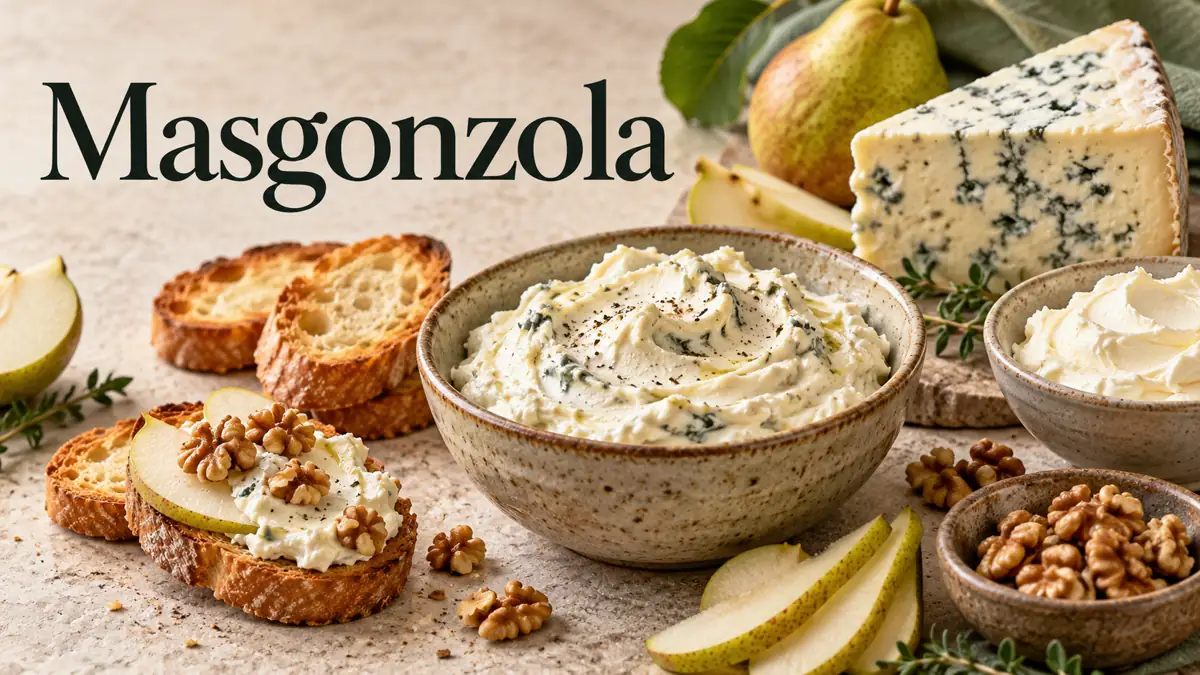
Masgonzola is a cheese name that can be confusing at first. It sounds like a traditional cheese from Italy, but it is less widely known than Gorgonzola or mascarpone. In documented culinary use, Masgonzola refers to a creamy cheese preparation that combines these two ingredients.
The name is useful because it describes a blend with two different qualities: Gorgonzola brings a savory blue-cheese flavor, while mascarpone softens the taste and adds a smooth texture. The exact product or recipe may vary, so the label and ingredient list matter.
This guide explains what Masgonzola means, how it differs from Gorgonzola, how it tastes, and how to use or store it. It also separates established information about Gorgonzola from details that may vary between Masgonzola products.
What Masgonzola Means and Where the Name Comes From
The clearest explanation is that Masgonzola combines parts of the names “mascarpone” and “Gorgonzola.” Culinary material from Swiss recipe publisher Betty Bossi describes Masgonzola as a soft cheese with alternating layers of Gorgonzola and mascarpone. The same recipe material uses “Gorgonzola-mascarpone” to describe the combination in other languages.
That evidence gives the name a practical meaning: it points to a cheese combination, rather than a wholly separate cheese with a distinct production tradition. Some products may be layered, while home cooks may simply blend or stir the two cheeses together. The format depends on the recipe or product.
Masgonzola has appeared in recipes for filled pasta, including ravioli. In one Betty Bossi recipe, it is mixed with ham for a pasta filling. This shows the term has been used in real cooking, not only as a recent internet expression.
However, the available evidence does not establish one universal recipe, fixed ratio, or separate protected designation for Masgonzola. It is safer to understand it as a culinary name for a Gorgonzola-and-mascarpone preparation. Avoid assuming every product with this name has identical ingredients or a long regional history.
Masgonzola at a Glance
| Detail | Information |
|---|---|
| What it is | A cheese preparation combining Gorgonzola and mascarpone |
| Main ingredients | Gorgonzola and mascarpone |
| Flavor | Savory and tangy, balanced by mascarpone’s mild creaminess |
| Texture | Soft, creamy, spreadable, or layered |
| How it differs from Gorgonzola | Masgonzola includes mascarpone; Gorgonzola is the blue-veined cheese on its own |
| Common uses | Pasta fillings, sauces, risotto, pizza, spreads, and appetizers |
| Recipe variation | No single standard ratio is established; products and recipes can differ |
| Protected status | Gorgonzola has EU Protected Designation of Origin status; no separate Masgonzola PDO designation is established |
| Storage | Keep refrigerated and follow the product label’s handling instructions |
| Allergen | Contains dairy; check the label for ingredients and allergen details |
How Masgonzola Differs from Gorgonzola
Gorgonzola is an established blue-veined cheese made from cow’s milk. Its name is protected as a European Union Protected Designation of Origin, which ties the product to specified production rules and an approved area. The Gorgonzola consortium describes two familiar styles: Dolce, which is softer and milder, and Piccante, which is firmer and stronger.
Masgonzola, by comparison, combines Gorgonzola with mascarpone. That makes it different from plain Gorgonzola, even though Gorgonzola provides its signature blue-cheese character. The mascarpone changes the blend’s texture and can make its flavor feel less sharp.
This distinction matters when shopping or following a recipe. A recipe calling for plain Gorgonzola may need a stronger, saltier flavor than a Masgonzola blend provides. A filling or spread calling for Masgonzola may rely on the extra creaminess that mascarpone contributes.
Gorgonzola’s formal status should not be transferred to the blend. The sources reviewed establish PDO protection for Gorgonzola, but not a separate Masgonzola PDO category. If origin or certification matters to you, check the product’s packaging for the protected designation and producer details.
Flavor, Texture, and Appearance
Masgonzola usually balances the tangy, savory flavor of blue cheese with the mild richness of mascarpone. The result can be less assertive than Gorgonzola on its own, though the strength depends on the type and amount of Gorgonzola used. A blend with more Dolce may taste gentler than one made with Piccante.
The texture may be soft, spreadable, or layered. Mascarpone is smooth and rich, while Gorgonzola can range from creamy to more crumbly, depending on its style and age. When combined, the cheeses can form a smooth filling or a visibly layered specialty cheese.
Color can also vary. Gorgonzola’s blue-green veins may remain visible in the mixture, particularly when the cheeses are layered or only lightly combined. In a thoroughly mixed preparation, the color may look more uniform, with blue-green streaks distributed throughout.
There is no single flavor profile that fits every product. Check the package or recipe for the Gorgonzola style, ingredients, and texture. If buying from a deli counter, ask whether the cheese is blended, layered, or sold as separate components.
How to Use Masgonzola in Cooking
Because it combines a soft texture with a distinct cheese flavor, Masgonzola can work in both warm dishes and cold appetizers. Use it where you want the taste of blue cheese with a smoother, richer finish. Add it gradually when seasoning: Gorgonzola can be salty, and the blend may not need much extra salt.
It can be spread on toasted bread or crackers, stirred into a sauce, or used as a filling for pasta. It can also enrich risotto, pizza, or baked vegetables. These are serving ideas based on how cooks use Gorgonzola and mascarpone together; a particular product’s texture and flavor may affect the result.
For a quick pasta sauce, warm a small amount over low heat with a splash of pasta water. Stir until smooth, then taste before adding salt. Avoid boiling the cheese mixture for a long time, since high heat can make a rich dairy sauce separate or become oily.
A simple serving plan is:
- Spread a small amount on toasted bread and add pear or walnuts.
- Stir it into warm pasta with a little cooking water.
- Use it in filled pasta or as a topping for roasted vegetables.
Because Masgonzola can be rich, it often works best as a flavoring ingredient rather than the main component of a large meal. Pair it with ingredients that offer contrast, such as fruit, herbs, toasted nuts, or vegetables. Start with a modest amount and adjust to taste.
Making a Simple Masgonzola-Style Blend at Home
If you cannot find a packaged product, you can make a similar blend with Gorgonzola and mascarpone. Let both cheeses soften slightly so they are easier to combine. Use a fork for a textured spread or a spoon for a smoother result.
There is no single standard ratio that applies to every product or recipe. For a mild blend, start with more mascarpone than Gorgonzola. For a stronger blue-cheese flavor, increase the Gorgonzola in small amounts. Taste as you go, since the saltiness and intensity differ by cheese.
You can also leave the cheeses partly mixed for a marbled appearance. This works for a spread or appetizer plate, while a more even mixture may be easier to use in a sauce or pasta filling. Add herbs, pepper, or a small amount of lemon zest if the dish needs extra freshness.
Keep the mixture refrigerated in a covered container and use clean utensils when serving. Treat it as a perishable dairy food, and follow the use-by guidance on the ingredient packages. A homemade combination does not become a shelf-stable product simply because it contains aged cheese.
Buying, Storing, and Serving It
Masgonzola may be sold in a specialty cheese section or used as an ingredient in recipes, but availability can vary by country and retailer. Search labels and deli descriptions for terms such as “Gorgonzola with mascarpone” or “Gorgonzola-mascarpone.” Those descriptions can clarify the product even if the exact name is unfamiliar.
Read the ingredient list before buying. It can tell you whether the cheese contains mascarpone, what kind of Gorgonzola is used, and whether other ingredients have been added. If the label is unclear, ask the seller how the product is made and whether it is intended for spreading, cooking, or both.
Store the cheese in the refrigerator, sealed or wrapped according to the package directions. Keep it separate from foods that readily absorb odors, and avoid leaving it out longer than needed for serving. For general food safety, the U.S. Food and Drug Administration advises keeping the refrigerator at or below 40°F (4°C) and discarding perishable foods left at room temperature for more than two hours.
For a cheese board, let a small portion soften briefly before serving so its texture is easier to spread. Return leftovers to the refrigerator promptly. If you notice an unusual smell, unexpected discoloration, damaged packaging, or a past use-by date, follow the product’s safety instructions and do not rely on taste alone to judge it.
Nutrition and Food-Safety Considerations
Masgonzola’s nutritional values depend on the proportions of Gorgonzola and mascarpone, the serving size, and any additional ingredients. It is a dairy-based food and may contribute protein, fat, and calories. A reliable nutrition figure should come from the product label rather than from a general estimate for the name.
People limiting saturated fat, sodium, or calories may want to use smaller portions. The cheese’s strong flavor can make a little go a long way, especially in pasta sauces, fillings, and spreads. Pairing it with vegetables, fruit, or whole-grain bread can also make it part of a more varied meal.
Anyone with a milk allergy should avoid it unless a qualified health professional has advised otherwise. People with lactose intolerance may respond differently to different dairy products, so they should use their own medical guidance and the package information. Masgonzola is not automatically lactose-free.
During pregnancy, food-safety advice for blue-veined cheeses depends on whether the cheese is made with pasteurized milk and how it is handled. The FDA advises pregnant people to avoid blue-veined cheeses unless the label confirms pasteurized milk. Follow local public-health guidance and check the specific product label.
Final Thoughts
Masgonzola is best understood as a creamy cheese preparation that combines Gorgonzola and mascarpone. Its name reflects those ingredients, and documented recipe material describes it as a layered soft cheese and uses it in filled pasta.
It differs from plain Gorgonzola because mascarpone softens the texture and flavor. The blend can be useful in spreads, sauces, pasta, and appetizers, but its exact composition may vary. Check the label or recipe rather than assuming a fixed ratio or formulation.
When buying or preparing it, think about the balance you want: more mascarpone for a milder, smoother result, or more Gorgonzola for a stronger blue-cheese note. Store it as a perishable dairy food and follow the package’s handling instructions.
(FAQs)
What is Masgonzola?
Masgonzola is a cheese preparation made with Gorgonzola and mascarpone. It combines blue-cheese flavor with a soft, creamy texture.
Is Masgonzola the same as Gorgonzola?
No. Gorgonzola is one of its components; Masgonzola also includes mascarpone. That addition makes the blend creamier and often milder.
Does Masgonzola have a fixed recipe?
The available recipe material describes a Gorgonzola-and-mascarpone combination, but it does not establish one universal ratio. Check the product label or adjust a homemade blend to taste.
How can I use Masgonzola?
Use it as a spread, pasta filling, or ingredient in sauces, risotto, pizza, and appetizers. Add it gradually to hot dishes and taste before adding extra salt.
Can I make Masgonzola at home?
Yes. Soften Gorgonzola and mascarpone, then mix them to the texture you want. Begin with a small amount of Gorgonzola and add more if you prefer a stronger flavor.
Is Masgonzola safe during pregnancy?
Check whether the specific cheese is made with pasteurized milk and follow current local health guidance. The FDA advises pregnant people to avoid blue-veined cheese unless the label confirms pasteurization.




[…] de yuca today—the Bolivian cassava and cheese dish?” This helps avoid confusion with other yuca items. If the person answering is unsure, ask whether the kitchen can […]
Comments are closed.