

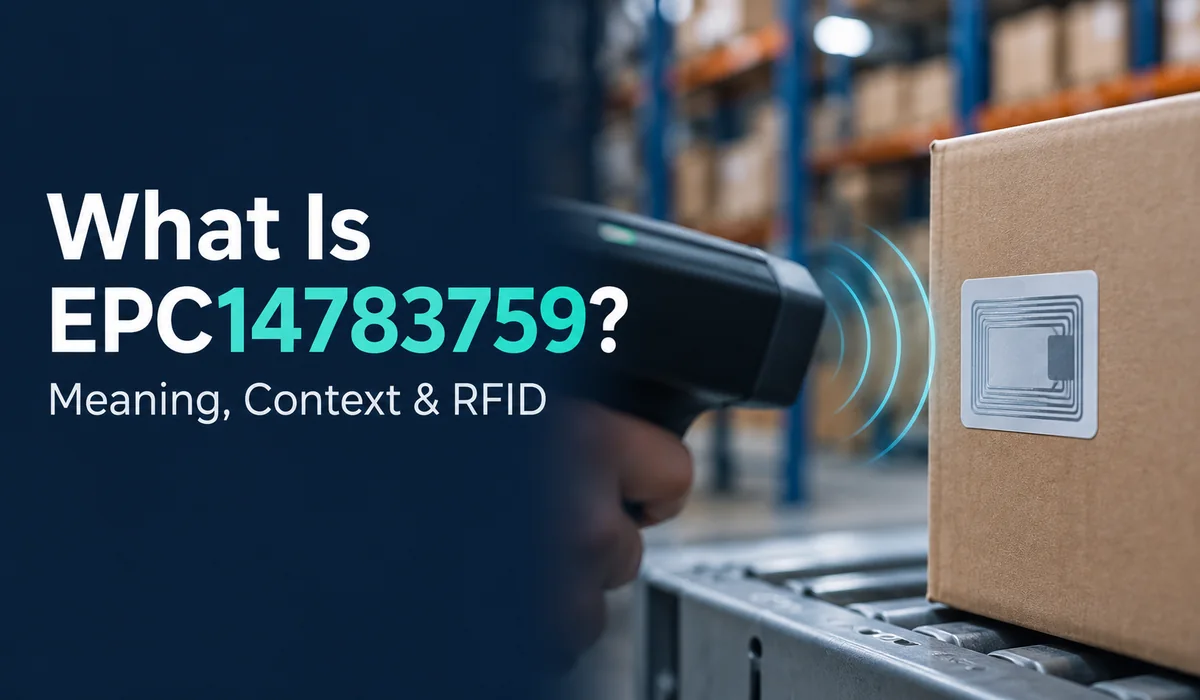
EPC14783759 is a string of letters and numbers. It looks like an identifier, but its appearance alone does not show who created it, what it identifies, or which system uses it. The code may be connected to an Electronic Product Code, or EPC, but that connection is not confirmed by the string alone.
An EPC is part of a standard system for identifying objects such as products, assets, and locations. Businesses can use EPC data with RFID tags and other data capture tools. An identifier can help a computer system find a record about an item, but it does not usually explain the item’s full history by itself.
That distinction matters when trying to identify EPC14783759. It could be an internal inventory number, a database reference, a sample value, or a shortened label. Without the label, website, document, or organization that supplied it, there is no reliable way to say exactly what it means.
Why the Exact Code Is Hard to Confirm
A code can look like an official standard identifier without being one. The letters “EPC” are widely used to mean Electronic Product Code, but a business or software tool can also place those letters before its own reference number. The name alone is not proof that a code follows a formal standard.
Structured EPC representations can include information about the format and the identifier scheme. A short string such as EPC14783759 does not provide enough context to confirm the scheme, the issuing organization, or the object it represents. It may be a display label rather than the data stored on a tag.
Public pages may also describe the same code in different ways. Some may call it a tracking code or say it identifies a product. Those claims need confirmation from a credible record, the company that issued the code, or the system where it appeared. Repetition across websites does not establish that a claim is true.
What an Electronic Product Code Means
An Electronic Product Code is an identifier designed to distinguish an object from other objects. In a retail setting, this can help a business tell one physical item apart from another, even when both items share the same product type. A business may use the identifier to connect an item with its own records.
An EPC is not the same as a full product description. It can work like a key that points software to information held elsewhere, such as a product category, item record, or business event. The information available depends on the system that issued and reads the identifier.
Some EPC formats relate to established identifiers used in trade, while others can represent different kinds of objects. The format matters because the digits cannot always be read correctly without knowing the relevant scheme. This is one reason a code should not be decoded based only on a familiar prefix.
How EPC Relates to RFID
RFID stands for radio-frequency identification. It uses a reader and a tag to send data over radio waves. Some RFID tags can carry an EPC, allowing a business to identify an item without scanning a printed barcode one item at a time.
The terms are related, but they do not mean the same thing. The EPC is identification data. The RFID tag is a device that may store or carry that data, and the reader is the equipment that captures it. Software then uses the captured information for a business task.
An RFID tag does not automatically provide a public location history. A reader must encounter the tag, and the business system must record and share the event. Whether a customer can see any of that information depends on the company’s setup and access rules.
How EPC Identifiers Are Structured
EPC identifiers use defined formats. Depending on the scheme, a full representation may include a type of identifier and fields that distinguish a product class or individual item. Some formats are designed to identify a single unit, while others serve different business needs.
A formal EPC can appear in a structured text form or as encoded data stored on a tag. A printed or displayed label may show only part of the information. A short code copied from an app, receipt, or web page might also be a local reference that links to a larger record.
For this reason, EPC14783759 cannot be confidently split into “company,” “product,” or “serial number” fields just by looking at it. That kind of decoding requires the original format and enough information to interpret its parts. Guessing at the structure could lead to a false product match.
What EPC Codes Are Used For
Businesses can use EPC identifiers in supply chains, retail stores, warehouses, manufacturing, and asset management. A tag on a case or item can help staff record when it enters a facility, moves to another area, or leaves for delivery. These records can support inventory checks and operations.
An identifier can also help distinguish one unit from another. For example, a shop may have many items with the same model and price. A serial-level identifier can help its system manage each physical unit separately, when the company has set up its records to do so.
EPC-related systems are useful only when the tag, reader, data, and software work together. A code on its own does not prove an item’s origin, ownership, authenticity, or present location. Those details depend on linked records and the organization responsible for them.
What Information a Tracking System May Show
A business tracking system may record events such as an item being received, packed, shipped, or moved between locations. These records can help staff understand where an object was scanned and what step it passed through. They may also help a company investigate missing stock or delays.
Some systems record more than location. Depending on the equipment and setup, a record may include the time of an event, the process step, or other details about an item’s condition. The identifier helps connect an event to an object, while the event record provides the surrounding context.
The code EPC14783759 does not reveal any of these details by itself. A person would need access to the system that stores the related records. If the code came from a company document or product label, that company is usually the best place to ask what information it connects to.
Why You Might See EPC14783759
An unfamiliar code may appear on an invoice, shipping label, product page, order record, warehouse screen, or inventory list. In each case, it could serve a different purpose. A retailer might use an internal reference, while a logistics company might display a scan or handling identifier.
The code may also come from a test database, an example in an article, or an automated system that gives records temporary names. A code used in one company’s software may not be recognized by another company, even if both systems use the term EPC.
Look at the words and numbers around it. A nearby company name, order number, product description, barcode, or tracking link may help show whether it is a customer-facing reference or an internal one. Keep the full document or screenshot when asking the issuer for help.
Is EPC14783759 a Package Tracking Number?
Not necessarily. A package tracking number is normally issued by a postal service or courier so the sender or recipient can check delivery progress. An EPC can help identify an object inside a business system, but that does not mean it can be entered into a courier’s public tracking page.
Some organizations may connect item identifiers with shipment records. Even then, the EPC string may not be the customer’s tracking number. A separate shipment reference may be needed to view delivery scans or contact the carrier.
If you saw EPC14783759 on a delivery message, check the order confirmation and the carrier named by the seller. Use the carrier’s official tracking page and the tracking number provided there. If the code is not accepted, ask the seller or carrier to confirm which number is meant for customer tracking.
How to Check the Code Safely
Start with the source. Check whether the code appears on a document or account from a business you recognize. Then compare it with the item, order, or shipment details you already have. A code is easier to understand when its source and purpose are clear.
You can take these steps:
- Note where the code appeared and copy it exactly.
- Check for a nearby order number, product name, or carrier.
- Ask the issuing company what the code identifies.
- Use a carrier’s official page only with a confirmed tracking number.
Be careful if an unexpected message asks you to pay a fee, share a password, or provide card details to “activate” or “verify” the code. The code itself does not prove that a message is genuine. Contact the business through a phone number or website you already trust.
Can EPC14783759 Be Decoded Online?
A code can be decoded only when its format is known and the required data is available. EPC standards define formats and methods for interpreting supported data. But an unfamiliar string is not automatically a complete EPC, and an online decoder may not recognize private or company-specific references.
If the code is part of an actual RFID record, the original system may provide a fuller representation or link it to a product record. A database lookup may require access from the business that created it. A public search may return nothing even when the code is valid for internal use.
Avoid entering private order details or personal information into an unknown code-checking site. If a business issued the identifier, ask its support team to confirm its purpose and the safe way to check it. They can tell you whether the string is an EPC, an internal ID, or something else.
Common Misunderstandings About EPC14783759
One common mistake is assuming that “EPC” in a code proves it is a formal Electronic Product Code. The letters may be part of a local naming scheme. The system that created the identifier determines what it means, not just the prefix.
Another mistake is treating every EPC as a parcel tracking number. EPCs can support identification and business visibility, but a code does not automatically give consumers access to delivery updates. A carrier’s tracking system may use a different identifier.
It is also easy to assume that an identifier contains all details about an item. In many systems, the code is simply a reference to data stored elsewhere. Without that linked record, it may not reveal a product name, owner, location, or history.
Final Thoughts on EPC14783759
EPC14783759 looks like an identifier, but its exact meaning is not confirmed by its format alone. It may relate to an Electronic Product Code system, or it may be a reference created for a specific database or organization. The context where it appears is essential.
EPC and RFID systems can help businesses identify objects and record events as goods move through operations. Still, the code does not independently prove what an item is or where it has been. Those answers depend on the system and records connected to it.
If you need to identify this exact code, start with the company or document that supplied it. Ask whether it is an EPC, an internal reference, or a shipping number. That direct confirmation is more dependable than guessing from the letters and digits.
(FAQs)
What does EPC14783759 mean?
Its exact meaning is not confirmed from the code alone. It may be an internal reference or an EPC-related label, but you need the issuing company or original system to identify it reliably.
Is EPC14783759 a real Electronic Product Code?
EPC is a real identification system, but that does not confirm this specific string follows an EPC standard. Its full format and source would need to be checked.
Can I use EPC14783759 to track a package?
Only if the seller or carrier confirms that it is the correct tracking number. An EPC-related code may be used internally and may not work in a public delivery tracking system.
Does EPC14783759 contain product details?
The code itself does not show a clear product description. If it links to a business database, that system may hold details, but access depends on the organization that issued it.
Is EPC the same as RFID?
No. EPC is identification data. RFID is a technology that can read or carry data using radio waves. Some RFID tags store EPC data, but the terms are not interchangeable.
What should I do if I find this code in a message?
Check the sender and order details through a trusted channel. Don’t share passwords or payment information just to verify the code. Ask the business that supposedly sent it to explain what it identifies.




[…] so the northbound and southbound carriageways are affected on different nights. A closure in one direction does not automatically mean the other carriageway is closed […]
Comments are closed.