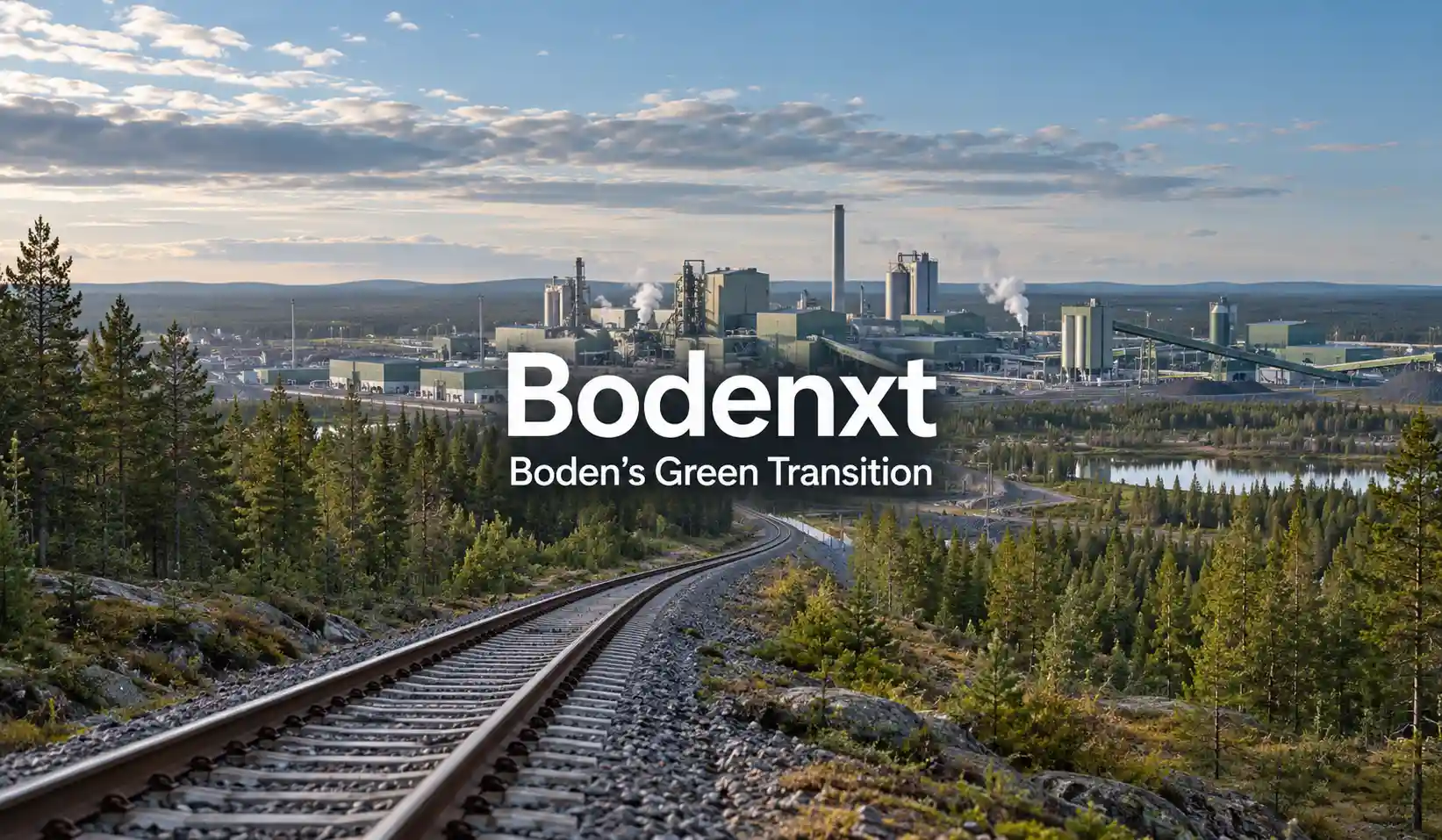
Boden is a town and municipality in northern Sweden facing a period of rapid change. New industrial projects, stronger defense activity, and related investments are creating new jobs and drawing attention to the area. They also bring practical questions about where people will live, how they will get around, and whether local services can keep up.
Bodenxt is the Municipality of Boden’s platform for coordinating and explaining this wider change. It brings together work on areas such as housing, skills, business development, and infrastructure. The name is tied to the town’s green transition, but the plan reaches beyond one factory or one kind of industry.
This guide explains what Bodenxt is, how it relates to Stegra’s green steel project, and what the transition could mean for residents and businesses. It also looks at the main challenges and the signs that can show whether growth is helping the whole community.
What Is Bodenxt?
Bodenxt is a municipal development platform for managing the major changes taking place in Boden. The Municipality of Boden describes it as a way to coordinate and present its work as the town responds to new industrial activity and other growth. It is not a consumer app, a private company, or a single construction project.
The name refers to a broad effort to help the community develop alongside new investment. That means linking decisions that might otherwise be handled separately. Housing, local jobs, transport, utilities, and business needs affect one another, so planning them together can help the municipality respond to growth more effectively.
Bodenxt is closely linked to the idea of a green transition: shifting industry and society toward lower emissions and more sustainable ways of working. In Boden, this includes plans for new industry, but also the everyday systems needed to support people who live and work there.
The initiative is led by the municipality, while projects involve different public bodies, companies, and local partners. Their roles vary. For example, the municipality plans services and development, while businesses build and run their own facilities. Bodenxt provides a shared frame for this work; it does not mean that one office controls every project.
Why Is Boden Undergoing a Green Transition?
Boden is part of Norrbotten, a northern Swedish region with access to renewable electricity, natural resources, transport links, and existing industrial knowledge. These conditions have drawn interest from companies seeking to make materials with lower emissions. The area’s industrial shift is part of a wider effort to reduce the climate impact of sectors such as steel.
Stegra’s planned green steel plant is a major driver of attention and investment. The company says its Boden facility is being designed to use renewable electricity and green hydrogen in production. Its goal is to replace coal-based steps used in traditional steelmaking and cut emissions. The plant is still a company project, so its targets should be understood as plans, not as results already achieved.
Growth is also connected to Sweden’s defense sector and other business activity. More investment can create jobs and demand for suppliers, housing, transport, and public services. That wider effect helps explain why the municipality presents Bodenxt as a community transformation rather than a steel-only plan.
Rapid growth can bring both opportunity and pressure. New work may attract skilled people and support local firms, but the town must also make room for newcomers and maintain a good quality of life. The transition’s success depends on how well these needs are handled as development moves forward.
Bodenxt’s Main Areas of Work
Bodenxt’s work covers several connected needs. The municipality identifies skills supply, living and housing, business development, and infrastructure as key areas. These topics help explain how Boden is preparing for growth, from training and recruitment to roads, rail, and the services that support daily life.
- Skills supply: helping employers find workers and connecting people with training and job opportunities.
- Living and housing: planning homes and making it easier for people to settle in Boden.
- Business development: supporting local companies and making room for new businesses.
- Infrastructure: improving transport and the water, power, and other systems industry and residents rely on.
These areas affect one another. A company may need workers, but workers need homes and transport. A new industrial site may need utilities and freight links, while nearby residents need safe routes and reliable services. Looking at these connections can help local leaders spot gaps before they become bigger problems.
The exact projects and schedules can change over time. It is useful to treat the four areas as a guide to the municipality’s priorities, not as a promise that every need has been met or every plan has been completed. Public updates can show what is underway and where further work is needed.
How Stegra Fits Into Boden’s Plans
Stegra is an industrial company building a green steel facility in Boden. Its plant is planned to combine green hydrogen, green iron, and steel production. The company says renewable electricity will power key parts of the process. It also states that the plant aims to make up to five million tonnes of steel each year by 2030, with emissions up to 95 percent lower than traditional steelmaking.
Those figures describe the company’s stated goals. They do not mean the facility is already producing steel at that scale or that the planned emissions cuts have been independently demonstrated at full operation. The difference matters when judging what the plant may deliver and when those benefits could arrive.
The plant has led to major infrastructure work. In June 2026, Boden Municipality reported that the new railway to Boden Industrial Park had been officially inaugurated. The rail connection is intended to support freight movement and link the industrial area to Sweden’s wider rail network. Road and utility work also forms part of the area’s development.
Bodenxt gives the municipality a way to connect industrial projects such as Stegra with wider community needs. The company’s plant may be a major source of jobs and investment, but housing, local businesses, transport, and public services help determine how much the community can benefit from that growth.
What Could the Transition Mean for Residents and Businesses?
For residents, the changes could mean more job options and a larger local economy. New employers may also create demand for shops, services, and suppliers. But potential benefits depend on whether residents can access the work and whether local training and hiring connect people with the skills employers need.
Housing is one of the clearest pressure points. Boden Municipality reported in May 2026 that rental apartment vacancies were close to zero and said the shortage was making it harder for people to move to the area. Limited housing can affect new workers, young adults, older residents, and families who need to change homes.
Local companies may gain new customers or find roles in supply chains, construction, transport, and services. At the same time, they may compete with larger employers for workers, space, and materials. Regular communication between businesses and the municipality can help reveal these needs, but it cannot remove every cost or staffing challenge.
Daily life may also change as more people and goods travel through the area. Roads, rail lines, utilities, schools, health care, and recreation all matter to residents’ experience of growth. A successful transition needs to account for these ordinary needs, not only investment totals or factory output.
Challenges That Could Shape Bodenxt’s Success
Housing is a major test because jobs alone do not ensure that people can settle in a community. If homes are scarce or costly, employers may struggle to recruit and residents may have fewer choices. The municipality can plan land and support development, but building enough homes also depends on investors, construction capacity, and the pace of demand.
Finding workers with the right skills is another challenge. Employers may need people with technical training, while public services and local businesses also need staff. Training programs, recruitment, and support for newcomers can help, but they take time and require coordination among employers, schools, and public agencies.
Infrastructure must keep pace with growth and work for more than freight. New industrial areas need power, water, wastewater systems, roads, and rail. Construction can affect traffic and nearby residents, while expanded industry can increase demand on shared resources. Planning needs to consider safety, environmental impact, and the daily needs of people living nearby.
There is also uncertainty around large industrial projects. Costs, financing, construction schedules, energy supply, and market demand can change. Bodenxt can help coordinate the municipality’s response, but it cannot guarantee that every business plan will succeed or that growth will happen exactly as expected. Clear public updates help people judge progress against what was promised.
Final Thoughts
Bodenxt is best understood as the Municipality of Boden’s framework for managing growth and social change. It connects industrial development with housing, skills, business activity, and infrastructure. Stegra’s steel plant is an important part of the story, but Bodenxt covers a broader set of issues that shape life across the municipality.
To understand how the plans are progressing, watch for practical results: homes completed, training that leads to jobs, local firms gaining work, and infrastructure that serves both industry and residents. Also pay attention to delays, housing shortages, and pressure on public services. These details offer a fuller picture than headline investment figures alone.
Boden’s green transition could bring important opportunities, but its long-term value will depend on how well the community manages the costs and demands of change. Bodenxt provides a way to organize that work. Its real impact will become clearer as plans turn into completed projects and as residents experience the results in everyday life.
(FAQs)
What is Bodenxt in simple terms?
Bodenxt is the Municipality of Boden’s platform for coordinating work related to rapid growth and the green transition. It covers areas such as housing, jobs and skills, business development, and infrastructure.
Where is Bodenxt based?
Bodenxt is linked to Boden, a municipality in Norrbotten County in northern Sweden. Its projects and planning focus on changes taking place in and around the community.
Is Bodenxt a software product or company?
No. The municipality describes Bodenxt as a development platform for the community’s transformation. It is not a downloadable app or a private software product.
How is Stegra connected to Bodenxt?
Stegra is building a green steel plant in Boden. Its investment is a major driver of local change, while Bodenxt addresses related community needs such as housing, skills, business development, and infrastructure.
What are Bodenxt’s main focus areas?
The municipality highlights skills supply, living and housing, business development, and infrastructure. These areas cover workforce needs, homes, local business growth, and the systems that connect and support the town.
Is the Boden railway to the industrial park complete?
Boden Municipality reported that the railway to Boden Industrial Park was officially inaugurated in June 2026. The line is intended to connect the industrial area with Sweden’s wider rail network and support freight transport.




[…] country. U.S. businesses may encounter different commercial credit bureaus and lender models, while UK firms may be assessed through local credit records and company information. Before applying, ask which records the lender […]
Comments are closed.