
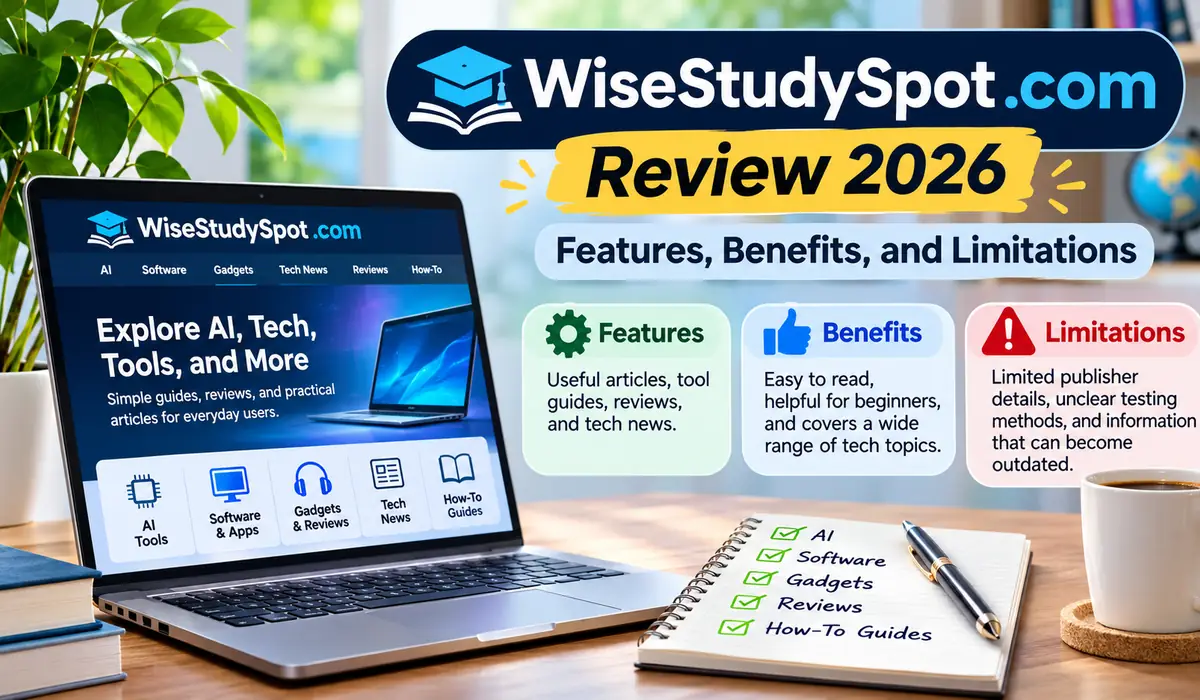
WiseStudySpot .com may sound like a website for homework, exam preparation, or online classes. Its published focus, however, is quite different. The site is primarily described as a technology blog that explains artificial intelligence, software, gadgets, online business tools, and digital skills for everyday readers.
That distinction matters if you are visiting for the first time. Rather than offering a classroom experience, the website brings together articles, comparisons, and practical guides. Some topics can help beginners understand common tools, while others are aimed at bloggers, developers, marketers, and small business owners.
This 2026 review looks at the website’s main content, useful features, possible benefits, and clear limitations. It also explains how to judge its advice carefully. The review reflects publicly described pages and recent independent inspections; details may change because direct access to the site was not available during this check.
What Is WiseStudySpot .com?
WiseStudySpot .com is an informational website centered on technology and online learning. Its main purpose appears to be helping readers understand digital products and ideas through written articles. It is closer to a general technology magazine than a school or structured training service.
The site’s categories cover artificial intelligence, software and tools, technology news, gadgets, reviews, and how-to material. That range gives visitors several paths into a subject, whether they want a basic explanation or an introduction to a product category.
The word “study” can create the wrong expectation. Available descriptions do not establish a course catalog, recognized certificates, student assessments, or a dedicated homework service. Reading a helpful article is not the same as joining a formal educational program.
For that reason, it is best understood as a place to explore digital topics, not as a replacement for a teacher, university, professional training provider, or an official product manual.
Main Content Categories and Topics
The most recognizable part of the website is its range of digital subjects. Recent accounts of its pages describe sections devoted to artificial intelligence, software, technology news, and gadgets, alongside reviews and practical guides. These are article categories rather than separate services.
The artificial intelligence material focuses on ways modern tools can assist with writing, video creation, coding, and everyday work. Software coverage introduces applications and compares their possible uses. Gadget articles discuss equipment that people may consider for home or professional setups.
Technology news adds a different angle by looking at developments or discussions in the wider digital world. How-to content is more task-focused and can explain the steps behind a process, such as improving a website workflow or choosing a suitable application.
Artificial Intelligence Articles and Tool Guides
Artificial intelligence is one of the website’s main subjects. Publicly described article examples include AI video generators, automated content workflows, and coding assistants. These topics are relevant to anyone exploring how software can support creative or technical work.
A useful introductory guide should explain what a tool does, the tasks it suits, and where human review is still important. That approach can help beginners avoid treating every new application as a complete solution. Automated output can contain errors, weak ideas, or unsuitable recommendations.
Readers comparing AI services should pay particular attention to privacy settings, usage limits, supported languages, and pricing. Free access may be restricted, and features can change without much notice. A blog post written months earlier may not reflect a product’s current plan.
Software Reviews and Digital Productivity
Software articles can be helpful when dozens of similar products compete for attention. A clear overview explains the main purpose of an application and the type of user who might benefit. WiseStudySpot .com reportedly covers digital tools, business software, browser extensions, and website-related applications.
The best comparisons go beyond feature lists. They explain setup difficulty, learning curves, compatibility, customer support, and practical limits. Those details often matter more than an impressive description of what a product claims it can do.
For a freelancer, the right software may simplify scheduling or repetitive work. A small business might care more about team access and predictable costs. A developer may prioritize reliability, integrations, and control over data. The same product can serve these readers differently.
Gadgets, Reviews, and Technology News
The gadget material brings physical products into the discussion. Reported topics include monitors, headphones, ergonomic equipment, and gaming furniture. These articles may interest people building a home office, upgrading a desk, or comparing everyday technology purchases.
A useful buying guide should consider comfort, compatibility, build quality, warranties, and the needs of different budgets. A large monitor may help one user manage several windows but be unnecessary for someone working on a small desk. Practical fit is more important than popularity.
Technology news is useful for discovering developments, although a headline alone rarely tells the complete story. Announcements, early product claims, and wider availability can happen at different times. The date of an article is therefore important, especially for rapidly changing tools.
How-To Guides and Practical Learning
How-to articles are often the most useful format for someone who wants to act on new information. Instead of only describing a technology, a guide can show how a task works and what preparation it requires. That makes unfamiliar subjects easier to approach.
The website’s reported topics include website workflows, digital marketing tasks, and online tools. A beginner might use this material to learn the terms involved, identify a sensible starting point, and avoid trying too many services at once.
Still, instructions need to be checked against the software version being used. A setting may move, a menu may change, or a feature may become paid. If steps no longer match the screen, stop and consult the current documentation rather than guessing.
Website Layout and Reader Features
Descriptions of the website show a familiar blog-style layout with topic sections, article pages, and navigation. This format is easy to understand for most readers. You can select an area of interest, open a post, and move on to related material without learning a new system.
Reviews of its pages have also mentioned a search box, article comments, and a newsletter sign-up. These features can make a publication more convenient, but their availability and behavior should be checked on the live website before use.
The newsletter may appeal to visitors who prefer updates delivered by email. Before subscribing, read the current privacy information and consider whether you want promotional messages. Providing an email address is optional for simply reading ordinary public articles, according to available descriptions.
Benefits for Beginners and Online Workers
The strongest potential benefit is convenience. A visitor interested in several digital topics can begin with one publication instead of searching separately for basic introductions to software, AI tools, and desk equipment. A broad collection makes casual exploration easier.
Another benefit is accessibility. Short explanations of unfamiliar technology can help readers build confidence before trying more detailed resources. This is especially useful for people who are new to website management or who simply want to understand current digital products.
There is also value in discovering possibilities. A comparison may introduce an application someone did not know existed, while a tutorial can show a different way to complete a task. The result may be a better question or a more focused plan, even if the article is not a final answer.
Limitations and Areas That Need Improvement
The largest limitation is transparency. Independent inspections have reported limited public information about the site’s owner and the professional background of its writers. Some posts display a byline, but a name without a clear biography does not tell readers how the information was tested.
Another concern is depth. A broad technology blog may explain a subject clearly without offering original experiments, detailed benchmarks, or independent product testing. Readers comparing expensive software or hardware should look for measurements, hands-on experience, and clear evaluation methods.
Freshness can also be difficult to judge. Visible posts have dates in 2026, but selected homepage articles do not prove a consistent publishing schedule. Advice about software prices or features may become outdated quickly, even when the original article was accurate.
Finally, the site name may attract visitors looking for school lessons or academic certificates. That expectation does not match its reported technology focus. Clearer explanations of what it offers, who writes the articles, and how reviews are prepared would make it easier for visitors to assess the publication.
Is WiseStudySpot .com Safe and Trustworthy?
A website can be real and useful without every claim on it being dependable. Recent inspections describe WiseStudySpot .com as an operating informational blog with standard policy and contact pages. That is a reasonable starting point, but it is not proof that all content or external promotions are safe.
There are also unanswered questions about ownership, author credentials, and some contact details. These gaps do not establish that the website is fraudulent. They do mean that readers have less public information available when judging responsibility and editorial oversight.
Take normal precautions when browsing. Check the address carefully, avoid unexpected downloads, and use official software stores or developer websites when installing applications. Never enter payment information on an unfamiliar page merely because a guide recommends a service.
Treat a review as one opinion, not a guarantee. For purchases, security changes, or business decisions, confirm the details elsewhere. This distinction between a website being accessible and its advice being independently verified is important for any lesser-known publication.
How to Use the Website More Effectively
Start by deciding what you need. If you want a beginner’s explanation of AI, browse that category first. If you are choosing software, focus on articles that explain use cases and limitations rather than only presenting a list of popular names.
Read the publication date and look for details that show how the article reached its conclusions. Screenshots, examples, balanced comparisons, and clearly stated limits are more helpful than broad promises. Be cautious when the main purpose seems to be promoting one particular product.
Before acting on advice, make a quick comparison with the current information from the company offering the tool. Keep an eye on regional prices, compatibility, data permissions, and cancellation terms. That habit is especially valuable when an article covers a paid service.
One simple reading rule is worth keeping:
- Use the article to understand an idea, then verify important details before you spend money or change settings.
Final Thoughts
WiseStudySpot .com appears to be a young technology publication with an emphasis on artificial intelligence, software, gadgets, practical guides, and digital work. Its wide subject range may be useful for curious beginners and people who want a straightforward introduction to unfamiliar products.
The main benefits are accessible explanations and convenient topic discovery. Its limits include unclear publisher credentials, uncertain testing methods, and information that may age quickly. The website also should not be mistaken for an accredited school or a course platform.
For the best experience, approach it as a starting point rather than a final authority. Read selectively, check when material was published, and confirm consequential details through current official information. That approach lets readers gain ideas without relying too heavily on any single blog.
Frequently Asked Questions (FAQs)
What is WiseStudySpot .com used for?
It is mainly used to read articles about artificial intelligence, software, gadgets, technology news, and digital work. It may help beginners understand tools and discover practical ideas, but it is not a formal classroom.
Is WiseStudySpot .com free to use?
Available accounts describe publicly readable articles without a required paid membership. However, products reviewed on the site may have their own charges, and any current subscription terms should be checked directly.
Does WiseStudySpot .com offer online courses?
No confirmed course catalog, examinations, or recognized certificates were found in recent descriptions of the site. Visitors seeking organized lessons or qualifications should choose a provider that clearly explains its teaching program.
Can I trust the website’s product reviews?
Its reviews may help with early research, but the available information does not establish that every product has been tested firsthand. Confirm performance, prices, and support details before making a purchase.
Is there an official WiseStudySpot mobile app?
Recent inspections did not identify a verified official mobile app. The service is described as a website accessed through a browser. Treat any app claiming the name carefully until the publisher confirms it.
Is WiseStudySpot .com suitable for US and UK readers?
Yes, many general technology topics can interest readers in both countries. However, products, prices, privacy rules, and warranties can differ, so always check the details for your own location.