

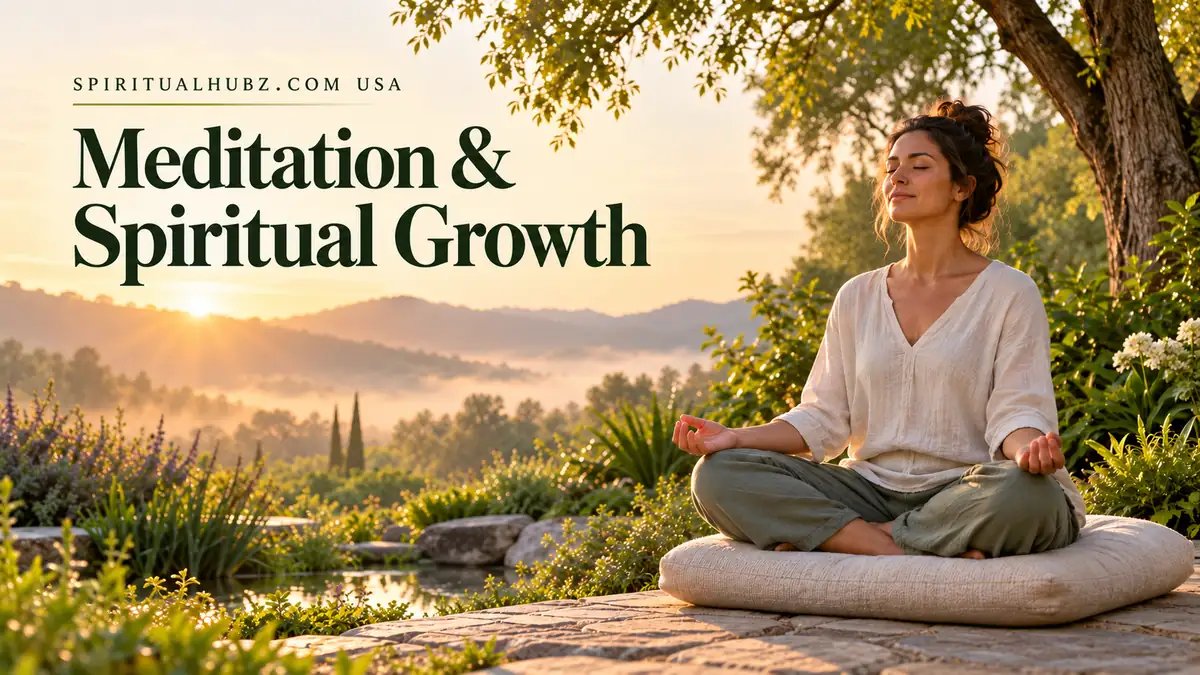
Meditation can be a simple way to pause, pay attention to the present moment, and reflect on what matters to you. It does not require special equipment, a particular religion, or a perfectly quiet mind. Many beginners start with a few minutes of breathing and build a routine that fits their daily life.
Spiritualhubz.com describes its content as covering spiritual meanings, dreams, tattoo symbolism, meditation, spiritual awakening, energy, and personal growth. Its “USA” search label does not confirm that the site is based in the United States. This guide explains how beginners can approach meditation and spiritual growth, and how to use online spiritual content as a starting point for personal reflection.
What Is spiritualhubz.com usa?
Spiritualhubz.com presents itself as a website for readers interested in spiritual meanings and personal reflection. Its About page says it covers symbols, numbers, animals, objects, dreams, and tattoo meanings. It also lists meditation, spiritual awakening, energy, and personal growth among its subjects.
That description gives readers a sense of the site’s intended focus, but it should not be taken as proof that every topic has a current, detailed guide. Websites change, and the articles displayed on a homepage may cover a wider range of subjects. Before relying on a particular page, check what it actually says and whether it names the author or explains where its claims come from.
The word “USA” is often added to a site name in online searches. By itself, it does not show that the website has a U.S. office, owner, or legal registration. Readers in the United States, the United Kingdom, or elsewhere can still explore its content, while treating its location as unconfirmed unless the site provides clear evidence.
Meditation and Spiritual Growth: A Beginner’s Starting Point
Meditation is a practice of directing attention. In a simple mindfulness session, you might notice your breathing, sounds around you, or sensations in your body. When your attention moves to a thought or worry, you notice that and gently return to your chosen focus.
This is not the same as forcing your mind to become blank. Thoughts will arise, especially when you are new to meditation. The practice is noticing when your mind has wandered and returning your attention without scolding yourself.
Spiritual growth is personal and can mean different things to different people. For one person, it may involve prayer or a connection with a religious tradition. For another, it may mean reflecting on values, building compassion, spending time in nature, or becoming more aware of daily choices. Meditation can support reflection, but it does not prescribe one belief system.
How to Try a Simple Meditation
Choose a comfortable place where you can sit safely for a few minutes. A chair is fine; you do not need to sit cross-legged or adopt a special posture. Keep your back comfortably upright, rest your hands, and let your eyes close or soften if that feels comfortable.
Set a short timer for three to five minutes. Notice the natural movement of your breath—perhaps the air at your nose or the rise and fall of your chest. You do not need to breathe in a special way. If counting helps, quietly count each exhale from one to five, then begin again.
When a thought, sound, or feeling pulls your attention away, name it gently—“planning,” “noise,” or “tension”—and return to the breath. Ending the session does not require a dramatic feeling of calm. Take a moment to notice how you feel, then continue your day.
A basic session can follow this sequence:
- Sit in a comfortable, steady position.
- Focus on one anchor, such as the breath or sounds.
- Notice distractions and return your attention with patience.
- Stop when the timer ends and check in with yourself.
Types of Meditation to Explore
Mindfulness meditation focuses on present-moment experience. It can be practiced while sitting, walking, or doing a routine task. Beginners often find it useful because the main instruction is straightforward: notice what is happening, then return attention when it wanders.
Guided meditation uses spoken instructions to lead you through breathing, body awareness, imagery, or reflection. It can help if you are unsure what to do during a session. Try a short recording with a calm pace, and stop if the guidance feels uncomfortable or does not suit you.
Mantra meditation uses a word, phrase, or sound as a point of focus. Loving-kindness meditation invites you to direct kind wishes toward yourself and others. Movement practices, such as slow mindful walking, let you notice each step and the sensations of your body. You do not need to master every approach; choose one that feels accessible and respectful of your beliefs.
Building a Meditation Routine That Lasts
A routine is easier to maintain when it fits into a day you already have. You might meditate after waking, during a lunch break, or before bed. The best time is the one you can repeat without adding pressure to an already difficult schedule.
Start small. A few minutes of practice can help you learn the basic steps, and a shorter session is better than abandoning the habit because you cannot set aside a long block of time. If you miss a day, resume when you can. Consistency matters more than a perfect streak.
You can also practice attention informally. Notice the taste and texture of a meal, feel your feet on the ground while walking, or pause to take a few unhurried breaths before a meeting. These moments are not a replacement for every structured practice, but they can make present-moment awareness easier to carry into everyday life.
Connecting Meditation With Personal Growth
Meditation may create a little space between an experience and your response to it. For example, you may notice frustration before answering a message, or recognize that you are tired before agreeing to another task. That pause can help you consider what response fits your values.
Reflection after a session can make the practice more personally meaningful. Ask yourself what you noticed, what felt difficult, or what you want to bring into the rest of the day. A brief journal entry can record these observations without turning meditation into a test of whether you are “improving.”
Spiritual growth does not need to be measured by unusual experiences or dramatic signs. It may show up as patience, honesty, gratitude, or a clearer sense of personal boundaries. These are everyday changes, and they can take time. Avoid comparing your inner life with accounts you see online.
Reading Spiritual Meanings With Care
Articles about dreams, numbers, animals, objects, or tattoos can introduce cultural beliefs and personal interpretations. A symbol does not always have one fixed meaning. Its significance may vary across cultures, religions, families, and individual experiences.
It helps to distinguish an interpretation from a verified fact. A website may describe what a symbol means in a particular tradition, but that does not prove that the symbol predicts an event or carries the same message for everyone. Consider the context, the tradition being discussed, and whether the article explains its basis.
Use symbolic content as a prompt for reflection rather than a rule for important choices. If a dream or sign makes you curious, you could ask what feelings it brought up or what it connects to in your life. Avoid making major health, financial, legal, or safety decisions based only on a spiritual interpretation.
Common Challenges for New Meditators
Restlessness is common. Sitting quietly may make you more aware of thoughts you had not noticed during a busy day. If stillness feels difficult, try a walking meditation or a shorter session. The aim is not to suppress thoughts but to notice where attention goes.
Some people become sleepy, distracted, or unsure whether they are “doing it right.” You can adjust your posture, open your eyes, or choose a different time of day. A wandering mind is not evidence of failure; returning to your focus is part of the practice.
Meditation can also bring up uncomfortable feelings for some people. You do not need to push through distress to prove commitment. Stop, ground yourself by noticing your surroundings, and choose a gentler activity if that feels safer. If difficult emotions persist or affect your daily life, consider speaking with a qualified health professional.
What Meditation Can and Cannot Do
Some research suggests that mindfulness and meditation may help people manage stress and may support well-being. Findings differ by practice and outcome, and research does not show that meditation works the same way for everyone. It is more accurate to describe it as a tool some people find useful than as a guaranteed route to calm, better health, or spiritual insight.
Meditation is not a substitute for medical or mental health care. It cannot diagnose a condition, and it should not delay help for serious or persistent symptoms. If you are receiving care, you can ask your clinician whether a meditation practice is appropriate for you.
A practical approach is to notice your own response over time. Does the practice help you pause, feel more present, or reflect more clearly? If it does not seem helpful, you can change the method or stop. There is no single meditation routine that everyone must follow.
Final Thoughts
Meditation can begin with a chair, a few minutes, and a willingness to notice the present moment. Start with a simple focus, expect your attention to wander, and return to it gently. Over time, you can explore guided sessions, walking meditation, or other approaches that suit your needs and beliefs.
Spiritualhubz.com may offer ideas for exploring meditation, symbolism, and personal growth, based on the topics listed on its About page. Read each article on its own terms, consider the cultural context, and look for clear support when it makes factual claims. Use spiritual reflection to deepen your questions—not as the sole basis for high-stakes decisions.
Frequently Asked Questions (FAQs)
How long should a beginner meditate?
Start with three to five minutes if that feels manageable. You can continue for longer as you become comfortable, but there is no required session length. A brief, regular practice may be easier to maintain than an ambitious routine.
Do I need to stop thinking to meditate?
No. Thoughts naturally arise during meditation. Notice when your attention has shifted, then return to your breath, a sound, or another focus. That gentle return is part of the exercise.
Can I meditate if I am not religious?
Yes. Many meditation practices focus on attention and awareness without requiring religious beliefs. You can choose a secular approach or adapt a practice to fit your own values and traditions.
What is the easiest meditation for beginners?
Breath-focused mindfulness is a simple place to start. Sit comfortably, notice your natural breathing, and return your attention to it when you become distracted. Guided meditation is another option if you prefer spoken instructions.
Does spiritualhubz.com usa confirm that the site is based in the United States?
No. The word “USA” in a search term does not establish where a website is operated. Look for clear information from the site or reliable public records before making a claim about its location.
Can meditation replace therapy or medical care?
No. Meditation may support well-being for some people, but it does not replace professional assessment or treatment. If you have persistent or serious symptoms, speak with a qualified health professional.




[…] work have been central parts of his parents’ professional lives. Tom and Christina have discussed parenting and family experiences through their podcast and comedy, creating occasional public glimpses into the atmosphere at […]
Comments are closed.