

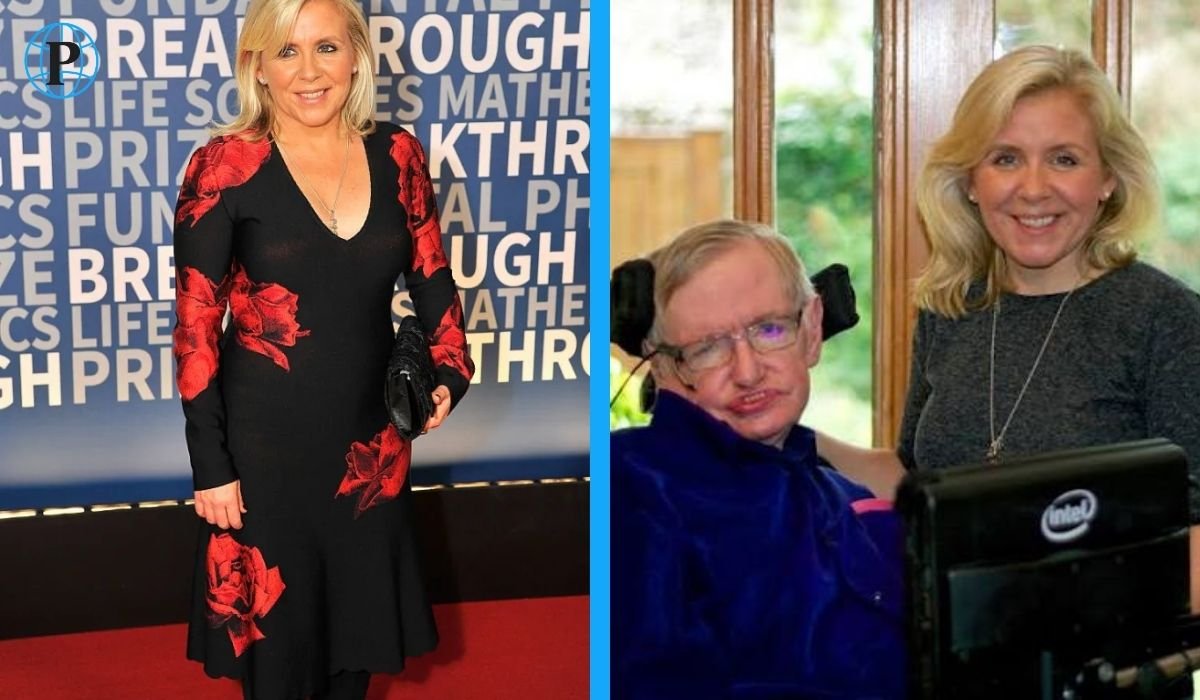
Lucy Hawking is widely recognized as the daughter of renowned theoretical physicist Stephen Hawking, but her own career extends far beyond her famous family connection. Born in England in 1970, Lucy developed a professional identity as a journalist, novelist, science communicator, and author for young readers. Her work has often centered on making science understandable and engaging for audiences who may not have a scientific background.
For people searching for Hawking Lucy, the most interesting part of her story is how she combined storytelling with science communication. Rather than pursuing a career in theoretical physics like her father, she used writing as her principal way of communicating ideas. Her collaboration with Stephen Hawking produced the popular George’s Secret Key series, a six-book adventure collection designed to introduce young readers to concepts involving space, physics, technology, and the universe.
Quick Bio Table
| Detail | Information |
|---|---|
| Full name | Catherine Lucy Hawking |
| Known as | Lucy Hawking |
| Birth year | 1970 |
| Birth date | November 2, 1970 |
| Birthplace | England |
| Nationality | British |
| Father | Stephen Hawking |
| Mother | Jane Hawking |
| Siblings | Robert Hawking and Timothy Hawking |
| Education | University of Oxford |
| Field of study | French and Russian |
| Additional training | International journalism |
| Profession | Journalist, novelist, author, science communicator |
| Best-known series | George’s Secret Key |
| Adult novels | Jaded and Run for Your Life |
| Child | One son |
Note: Public biographical sources differ slightly on some dates and personal details; the table uses the most consistently reported information available from established references.
Early Life and Family Background
Lucy Hawking grew up in a family where science and intellectual curiosity were important parts of everyday life. Her father, Stephen Hawking, became internationally famous for his work in theoretical physics, cosmology, and black holes, while her mother, Jane Hawking, became known as a writer. Lucy also has two brothers, Robert and Timothy. She spent much of her childhood in Cambridge after an early period in Pasadena, California.
Being Stephen Hawking’s daughter naturally placed Lucy close to one of the most recognizable scientific figures of the modern era. However, her professional path developed in a different direction. Her education and later career show an emphasis on languages, journalism, storytelling, and public communication rather than academic physics.
That distinction is important when discussing Lucy Hawking. She is not known primarily as a physicist or as someone who continued her father’s scientific research. Instead, her contribution has been to communicate scientific ideas through accessible writing, particularly for children and families.
Education and Early Career
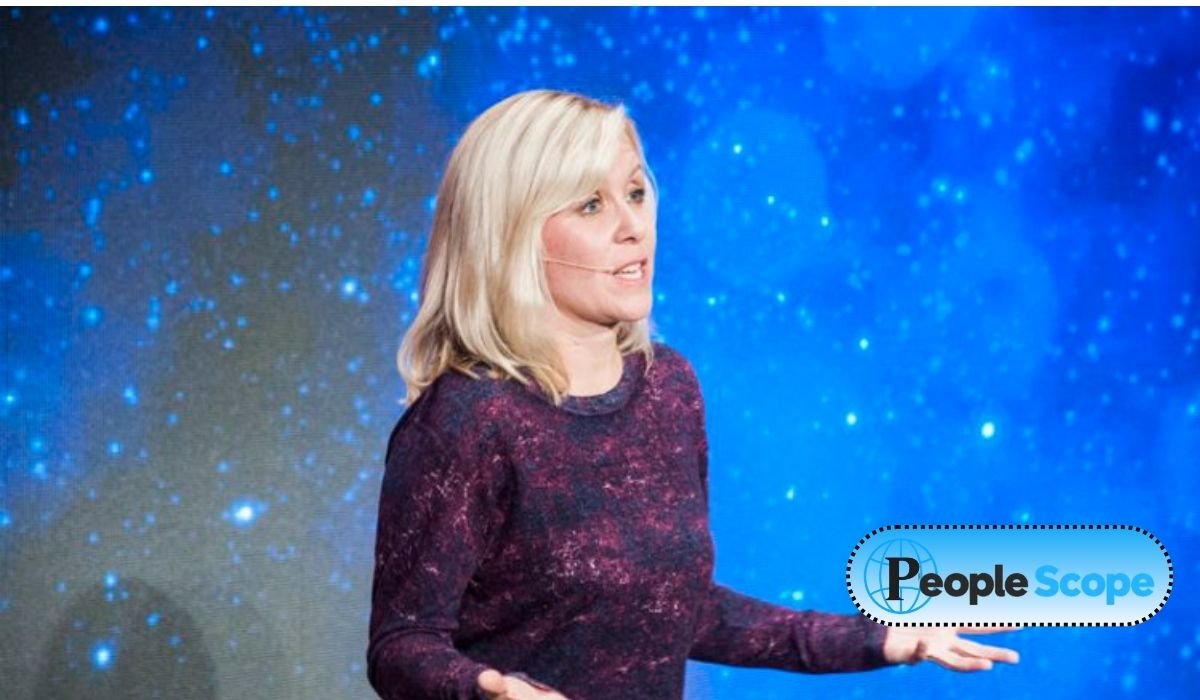
Lucy studied French and Russian at the University of Oxford. She later studied international journalism at City University of London, giving her a foundation that connected language, reporting, and communication. Her early professional experience included journalism for publications such as The Daily Mail, The Telegraph, The Times, and London Evening Standard, as well as work in radio journalism.
Her journalism background became useful when she moved increasingly toward books and science communication. Reporting requires complicated subjects to be explained clearly, while fiction depends on creating stories that hold a reader’s attention. Lucy’s later work brought these skills together, particularly when she began writing science-based adventure stories for younger audiences.
Before becoming strongly associated with children’s science fiction, Lucy also wrote fiction for adults. Her novels included Jaded, published in 2004, and Run for Your Life, published in 2005 and also known as The Accidental Marathon. These books established her as an author independently of her later collaboration with her father.
Lucy Hawking and Stephen Hawking’s Collaboration
One of the defining chapters of Lucy Hawking’s career began with George’s Secret Key to the Universe. First published in 2007, the book combined adventure storytelling with explanations of scientific concepts. Lucy worked with Stephen Hawking and scientist Christophe Galfard on the project, while Garry Parsons provided the illustrations.
The basic idea was straightforward but ambitious: science could be introduced through an entertaining story rather than presented only as a textbook. The fictional character George encounters extraordinary adventures involving space, technology, planets, and black holes, giving young readers opportunities to encounter real scientific ideas through narrative.
This approach became the foundation of the George’s Secret Key series. The publisher describes the books as cosmic adventures that help readers learn about the science behind the universe. The series ultimately grew to six main books, ending with George and the Ship of Time.
What Is the George’s Secret Key Series?
The six-book series includes George’s Secret Key to the Universe, George’s Cosmic Treasure Hunt, George and the Big Bang, George and the Unbreakable Code, George and the Blue Moon, and George and the Ship of Time. Across the series, science, adventure, technology, environmental themes, and space exploration are woven into fictional plots.
Lucy Hawking’s role is especially significant because the books demonstrate how storytelling can serve as a bridge between specialist knowledge and general readers. Stephen Hawking brought his scientific expertise to the collaboration, while Lucy’s background in journalism and fiction helped shape the material into stories suitable for younger audiences.
Her official biography states that the George books are based on real science and were created with leading scientists. It also reports that the series has been published in more than 40 languages, illustrating the international reach of this science-education project.
Lucy Hawking’s Work in Science Communication
Science communication became an increasingly important part of Lucy Hawking’s professional identity. One notable project was the Principia Space Diary, created in 2015 with Curved House Kids for the UK Space Agency. The educational book was connected with astronaut Tim Peake’s mission to the International Space Station and was designed for primary-school students.
Her work has also received recognition in science education and outreach. According to her official biography, she won the Sappio Prize for Popularizing Science in 2008 and the UNSW Medal for Outstanding Science Communication in 2015. In the same year, Queen Mary University of London awarded her an honorary doctorate in science for her work connected with STEM education.
These achievements help explain why Lucy Hawking’s career should not be reduced to the phrase “Stephen Hawking’s daughter.” Her professional record includes journalism, fiction, children’s literature, educational projects, and public engagement with science.
Her Work Beyond Books
Lucy has also participated in projects connected with social and educational issues. Her official biography notes that she worked with the Guardian Media Group on The Party, a 2017 virtual-reality film concerning an autistic teenage girl. The project was shortlisted in a social-impact category at the Virtual Reality Awards.
She has also been involved with organizations connected with autism research and the legacy of Stephen Hawking. Her official biography identifies her as a trustee of the Autism Research Trust and chairperson of the Stephen Hawking Foundation. These roles place her work within a broader effort involving science, education, research, and public engagement.
Lucy Hawking’s Relationship With Her Father’s Legacy
Lucy Hawking’s connection to Stephen Hawking is an important part of her public profile, but her work also demonstrates a distinct professional identity. Their collaboration on children’s books created a particularly accessible side of Stephen Hawking’s public work, allowing scientific concepts to reach readers through fictional adventure.
The collaboration also created a lasting literary connection between father and daughter. The George series continued through six books, with the final installment, George and the Ship of Time, expanding the fictional universe created through their earlier work. Publisher information identifies the book as the conclusion of the series.
For readers researching Hawking Lucy, this is perhaps the most useful context: her public identity includes the Hawking family legacy, but her career has its own history. She built experience in journalism and adult fiction before becoming particularly prominent as a children’s author and science communicator.
Lucy Hawking’s Personal Life and Public Profile
Lucy Hawking has generally maintained a more private public profile than her father. Published biographies identify her as a mother of one child, and publisher biographies have described her as living in the United Kingdom.
Because she is the daughter of a globally famous scientist, questions about her family frequently appear in searches. However, reliable information about her professional projects is substantially easier to verify than details about her private day-to-day life. For that reason, responsible biographies should distinguish documented career information from speculation about personal matters.
What Makes Lucy Hawking’s Career Distinct?
Lucy Hawking’s career is distinctive because she occupies an unusual space between literature and science education. She did not need to become a physicist to contribute to science communication. Her work demonstrates another route: taking complex ideas and turning them into stories that invite readers to become curious about science.
The George series is the clearest example. Instead of presenting physics as a collection of technical definitions, the books use characters, problems, exploration, and adventure to introduce subjects such as the universe, technology, time, and space. Publisher descriptions confirm that the books are aimed at young readers and combine fiction with scientific learning.
Conclusion
Lucy Hawking has established a career that stands on its own while remaining closely connected to the legacy of Stephen Hawking. Her background in languages and journalism led into adult fiction, children’s literature, science communication, and educational projects. Her best-known literary achievement is the six-book George’s Secret Key series, created with Stephen Hawking and other scientific collaborators.
For anyone searching for Hawking Lucy, the broader story is more informative than simply identifying her as Stephen Hawking’s daughter. She is a journalist, novelist, children’s author, and science communicator who has helped make scientific subjects more approachable for younger audiences. Her work continues the family connection to science while expressing it through storytelling, education, and public engagement.
FAQs
1. Who is Lucy Hawking?
Lucy Hawking is a British journalist, novelist, children’s author, and science communicator. She is the daughter of physicist Stephen Hawking and writer Jane Hawking. She is particularly known for co-creating the George’s Secret Key children’s book series.
2. What is Lucy Hawking famous for?
Lucy Hawking is best known for her work as a science communicator and for the George’s Secret Key series. The six-book collection uses fictional adventures to introduce young readers to concepts related to physics, space, technology, and the universe.
3. How many George books did Lucy Hawking write?
The George’s Secret Key series contains six main books. They are George’s Secret Key to the Universe, George’s Cosmic Treasure Hunt, George and the Big Bang, George and the Unbreakable Code, George and the Blue Moon, and George and the Ship of Time.
4. Did Lucy Hawking write books before the George series?
Yes. Lucy Hawking wrote adult novels before beginning the George series. Her earlier books include Jaded and Run for Your Life, the latter also published under the title The Accidental Marathon.
5. How is Lucy Hawking connected to Stephen Hawking?
Lucy Hawking is Stephen Hawking’s daughter. They became professional collaborators through theGeorge’s Secret Key books, combining Lucy’s storytelling and communication skills with her father’s scientific expertise to introduce science to younger readers.
Robert Kelbie: Biography, Early Life, Family, Career, and More




[…] Lucy Hawking: Everything You Need to Know About Stephen Hawking’s Daughter […]
Comments are closed.